How to Check a Used Engine Before Buying: A 9-Step Yard Inspection
A used engine is the single most expensive thing you can get wrong at a salvage yard. Here is the inspection I run before I hand over money, in the order I run it.
Key Takeaways
- Verify the engine before you inspect it — digit 8 of the VIN is the engine code on most domestic and Asian vehicles, and the donor VIN belongs on your receipt.
- Three findings end the deal on the spot: milky oil, metal shavings, or a crank that will not turn.
- Get the warranty in writing. Full-service yards run 30 to 90 days; LKQ offers 6 months.
- A used OEM engine runs 20-50% of new dealer price, so a bad one wipes out several parts' worth of savings at once.
What a used engine inspection actually catches
A 20-minute inspection on the pallet catches head gasket failure, bearing failure, a seized crank, and a wrong-application engine — the four problems that turn a cheap engine into a weekend you will not get back. Used OEM parts sell for 20-50% of new dealer price, and an engine is the largest line item you will ever pull from a yard. Getting it wrong costs you the part plus the labor to install and remove it.
The 9-step used engine inspection
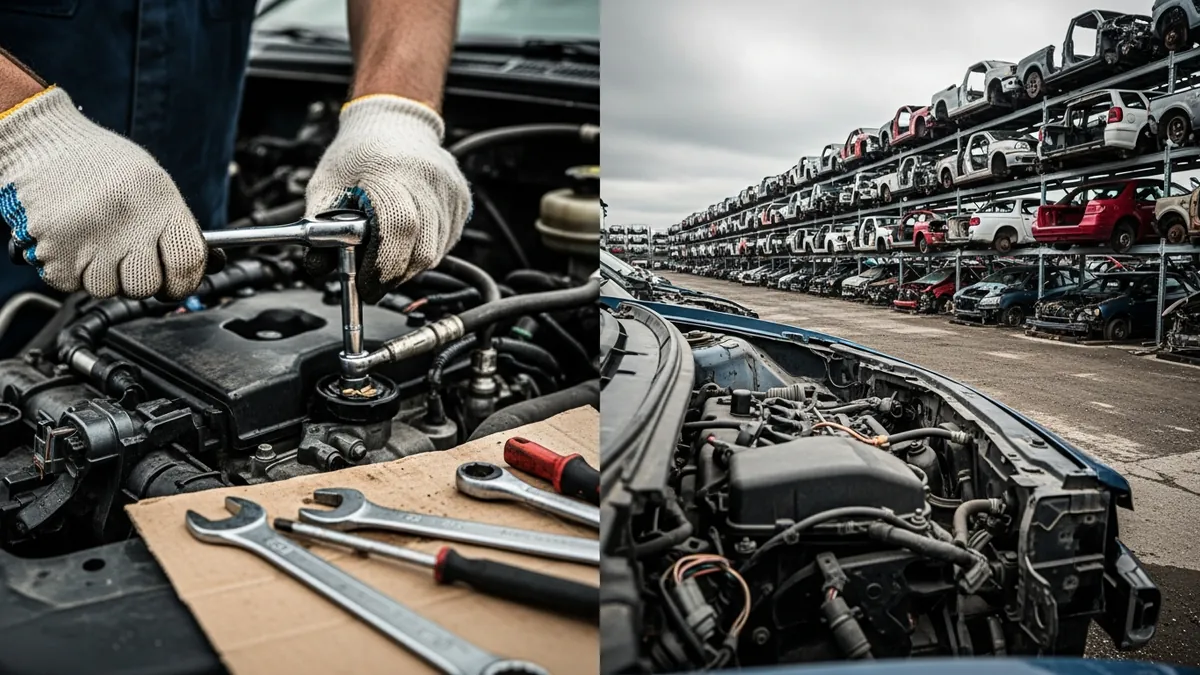
Run these in order. Identity first — no point reading oil on an engine that was never going to bolt into your car. Nothing here needs more than the tools you should already be carrying on a yard run, plus a compression gauge for the last step.
- Confirm the engine code. On most domestic and Asian vehicles, digit 8 of the VIN is the engine code. Read it off your own car first, then match it against the donor. Our VIN lookup tool will decode what you have.
- Read the casting numbers on the block and head. They are raised or stamped into the metal, usually on the block deck near the bellhousing flange and on the head near the intake ports. Same displacement is not the same engine — a BMW N52 and N54 share nothing useful.
- Get the donor VIN written on the invoice. Ask before you pay, not after. A yard that records the donor VIN on the receipt can honor a warranty claim. One that shrugs cannot, whatever the printed policy says.
- Walk the outside of the engine. Check the main seal areas, oil pan rail, valve cover gaskets, and timing cover. Seeping is normal at high mileage; active dripping is a gasket job you are now paying for. Then look for what kills a deal: a cracked block, a punched-out freeze plug, or bent engine mount brackets, which say the donor took a hard front hit.
- Pull the oil fill cap and look at the underside. Clean metal with a light oil film is what you want. Thick yellow-brown sludge means the owner skipped oil changes for years, and that neglect is baked into every bearing and lifter inside. Creamy tan residue means coolant in the oil.
- Pull the dipstick and read it in daylight. Amber to dark brown is fine. Milky or foamy oil means a blown head gasket or cracked block. Rub a smear between two fingers and look for glitter — metal shavings mean bearing failure. Do this outside; shop lighting hides fine particles.
- Check the coolant. With the engine cold, pull the radiator or expansion tank cap and look for an oil film on top or brown sludge on the cap threads. Both mean the head gasket has let go in the other direction.
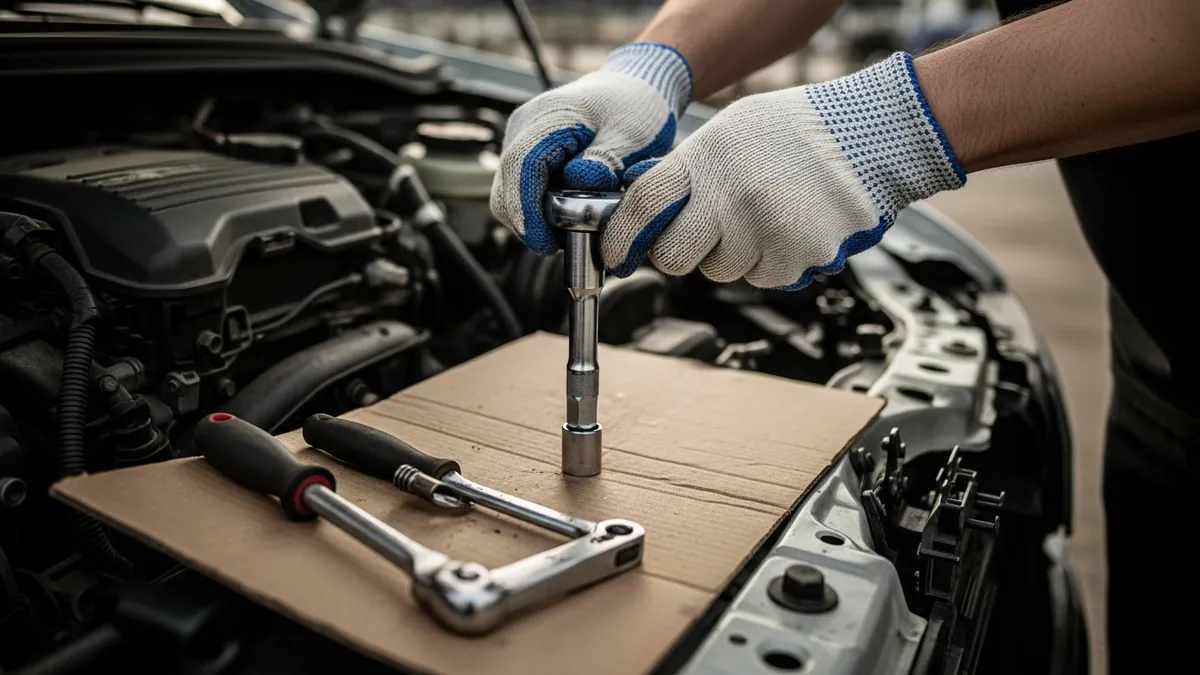
- Turn the crank by hand. Put a socket and breaker bar on the crankshaft pulley bolt and rotate clockwise through at least two full revolutions. It should turn with even resistance. Grinding, a hard catch, or a crank that will not budge means seized or damaged internals. Walk away.
- Compression test it if the yard allows. Pull every plug, thread the gauge into cylinder one, and crank through several revolutions with the breaker bar. Record each cylinder. Absolute numbers run low compared to a running test, but the spread is what matters — more than roughly 15% variance points at a bad ring, a burnt valve, or a gasket leaking between cylinders.
Do not forget the accessory drive
Spin every pulley by hand. The alternator pulley should turn with slight magnetic resistance and no grinding. The water pump pulley should have zero side-to-side play, and a wet weep hole underneath means the seal has failed. Check the tensioner and idler for roughness too. If three are shot, you should be paying less.
Two things never get reused regardless of how they look: the timing and serpentine belts, and the fuel pump, injectors, and filter. Those come new, whatever the donor mileage.
Inspection points and what a bad result means
| Where you look | What you want to see | What the bad result means |
|---|---|---|
| Dipstick oil | Amber to dark brown, no glitter | Milky = blown head gasket; shavings = bearing failure |
| Oil fill cap underside | Light film on clean metal | Sludge = skipped oil changes, accelerated internal wear |
| Coolant and cap | Clean coolant, no film | Oil film or sludge = head gasket breach into the cooling jacket |
| Crank rotation | Two smooth revolutions | Catching or locked = seized bearings, hydrolock, or bent rod |
| Block and freeze plugs | No cracks, plugs seated flat | Crack or blown plug = the donor froze or badly overheated |
| Engine mount brackets | Straight, no torn rubber | Bent or sheared = hard collision; inspect the block twice as hard |
| Water pump weep hole | Dry | Wet = failed pump seal, replace before install |
| Compression spread | Under 15% spread | Wide spread = bad ring, burnt valve, or gasket between cylinders |
Safety rules that are not optional
Never open a pressurized cooling system while it is hot. If the donor ran that morning or came off a hot test stand, wait an hour minimum before touching a radiator or expansion tank cap. Hot coolant under pressure sprays out at well over boiling, and it goes at your face.
If the engine is still in a car and you plan to disconnect fuel lines, relieve the fuel pressure first, disconnect the battery negative terminal, work in open air, keep flame and spark away, and have a Class B extinguisher in reach. Gasoline vapor in a confined space is what hurts people, not the liquid.
Do not get under a vehicle to reach the crank pulley unless it is on rated jack stands. A jack alone is not a support. Most yards ban customer jacks and pre-lift their cars for this reason, covered in our guide to pulling your own parts.
What to ask the yard before you pay
Four questions, and you want the answers on the invoice rather than spoken across a counter. Was the donor running when it arrived, or towed in dead? What was the odometer reading, which most yards log at intake? What is the warranty term, and does it cover labor or parts only? What is the donor VIN?
Full-service yards typically warranty engines for 30 to 90 days, and LKQ offers 6 months. A 30-day warranty on an engine you cannot install for three weeks is close to worthless, so ask whether the clock starts at purchase or installation. If one yard's terms are bad, another nearby usually has the same engine. Search our junkyard directory to compare stock near you, and read our walkthrough on buying used auto parts at salvage yards before you negotiate.
When to walk away
Some findings are negotiating leverage. These are not. The repair cost exceeds what you would save if the yard gave the engine away.
- Milky or foamy oil — coolant is in the oil, so you are buying a head gasket job at minimum and a cracked block at worst.
- Metal shavings on the dipstick — bearings have come apart and the crank journals are scored. That needs a machine shop, not an installer.
- A crank that will not rotate — seized, hydrolocked, or bent. There is no version of this you fix in a driveway.
- A cracked block or blown freeze plug — the donor froze or cooked itself, and the damage you can see is not the only damage.
- No donor VIN and no answer on whether it ran — the yard either does not know or will not say. Both are reasons to buy elsewhere.
Everything else is a price conversation. A weeping valve cover gasket, a rough idler, a failed water pump, sludge without shavings — those are known costs you subtract from the asking price. The five above are not costs. They end the conversation.