Copart and IAA for Individuals: Can You Buy Salvage Cars Without a License?
Individuals can buy at Copart and IAA, but not every vehicle and not in every state. What the companies say in their own filings, where brokers come in, and what state salvage rules add on top.
Key Takeaways
- Copart says it may sell to the general public directly, or members can buy through a registered broker who meets local licensing rules (fiscal 2026 annual report).
- IAA's owner, RB Global, lists the general public among IAA's buyers, but notes that some state and local rules limit who can buy damaged and total-loss vehicles.
- Every Copart buyer must show government photo ID; business members also provide licenses.
- State title rules decide what you can do afterward. In Texas, a nonrepairable title issued after September 1, 2003 means parts or scrap only.
Yes, an individual can often buy at Copart and IAA without a dealer license, but not every vehicle is open to the public. Both companies sell mainly to licensed businesses, and state and local laws restrict who may buy certain salvage and total-loss vehicles. When a listing is restricted, the usual route is a registered broker who holds the required license and bids for you.
Can a public buyer bid at Copart?
The clearest answer is in Copart's own annual report. In its filing for the fiscal year ended July 31, 2026, Copart says it sells vehicles principally to licensed dismantlers, rebuilders, repair licensees, and similar businesses, and that it "may sell to the general public either directly or members may purchase a vehicle offered at Copart through a registered broker" who meets local licensing and permitting requirements.
The same filing explains membership. A person or business fills out a basic application, and registration lets a member transact at any Copart auction, subject to local licensing and permitting requirements. Before any member can buy a vehicle, they have to provide current government-issued photo identification; business members also supply business information, including copies of licenses.
Membership tiers cap how much you can bid on. In the U.S., Copart offers Guest, Basic, and Premier memberships. A Basic member can bid on one vehicle at a time without a deposit, or up to five with a deposit. Premier members can bid on multiple vehicles at once.
Notice the qualifier: "subject to local licensing and permitting requirements." A registered membership doesn't open every vehicle in the auction to you.
Where do Copart's cars come from?
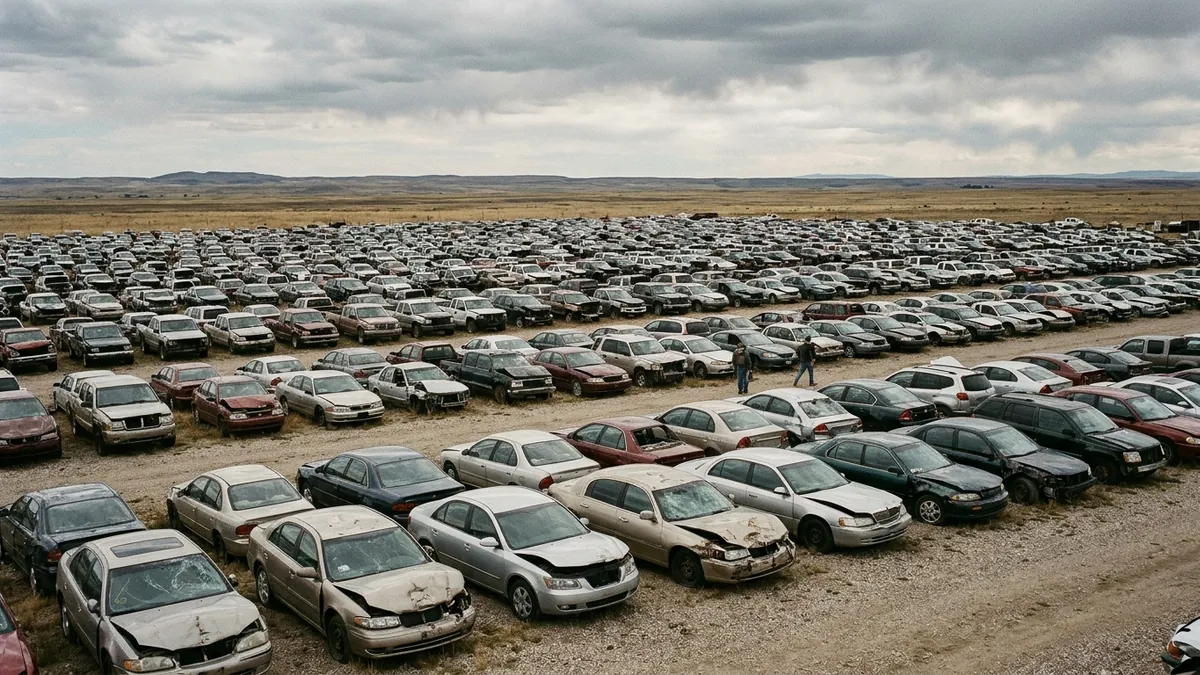
Most of what you see at a salvage auction is insurance inventory. Copart's filing says its vehicle sellers consist primarily of insurance companies, but also include dealers, individuals, charities, and others. Many of those cars are total losses, which is why so many listings carry salvage or nonrepairable title types instead of clean titles.
Bidding happens online. Copart says it sells virtually all of its vehicles on its VB3 virtual marketplace, which uses a two-step bidding process. The vehicle sits at a Copart facility until ownership documents are transferred, so plan how you will inspect it, if the location allows, and how you will move it once you win.
Can individuals buy at IAA?
IAA is owned by RB Global, and RB Global's annual report for 2025 lists IAA's buyer customers as body shops, rebuilders, used car dealers, wholesalers, exporters, dismantlers, recyclers, brokers, "and the general public, among others." So the public is part of IAA's buyer base.
The same report adds the limit: some state, provincial, and local regulations restrict who can purchase damaged and total-loss vehicles, and those rules also determine whether a vehicle can be sold as rebuildable or only for parts or scrap. It also lists platform registration and administrative fees among the fees IAA collects from buyers. Read IAA's current buyer terms for your location before you register.
Why are some salvage vehicles restricted to licensed buyers?
Salvage vehicles can be rebuilt and put back on the road, or stripped for parts, so states regulate who buys them. Texas shows how detailed the rules get. Its Salvage/Nonrepairable Motor Vehicle Manual (January 2026) sets several limits that affect individual buyers:
| Texas rule | What it means for an individual |
|---|---|
| A casual sale is a sale at auction of five or fewer salvage or nonrepairable vehicles to the same person in a calendar year. | Individuals can buy a limited number per year without a dealer license. |
| A salvage pool operator may only conduct casual sales at auction, and the vehicle must carry a salvage or nonrepairable title before delivery. | The title type is set before you buy. Read it in the listing. |
| A nonrepairable title issued on or after Sept. 1, 2003 may not be rebuilt, retitled, or registered. | That vehicle is parts or scrap only, no matter how good it looks. |
| Anyone who repairs or rebuilds more than five salvage vehicles in a calendar year needs a salvage vehicle dealer license. | Rebuilding as a side business crosses into licensed territory quickly. |
| A rebuilt salvage vehicle needs a Rebuilt Vehicle Statement (VTR-61) and a $65 Rebuilt Salvage Fee to be retitled. | Budget for paperwork and inspection, not just the bid. |
Other states write their own versions of these rules. Our guide to salvage vs rebuilt titles explains the brand categories, and your state DMV's salvage page is the authority for your location.
How does buying through a broker work?
A broker is a licensed business that bids under its own license for a vehicle you choose. Copart's filing describes this as buying through a registered broker who meets local licensing and permitting requirements. Payment and paperwork run through the broker, so have it spell out exactly who pays the auction and how the title gets to you.
Before you use one, confirm three things:
- The broker is registered with that auction. Ask for proof and check it with the auction directly.
- The full fee list. Brokers charge their own fee on top of the auction's buyer and administrative fees. Get both in writing.
- Whose name goes on the title. Know how the title will be assigned to you and whether that works with your state's rules for the brand involved.
What should you check before bidding on a salvage car?
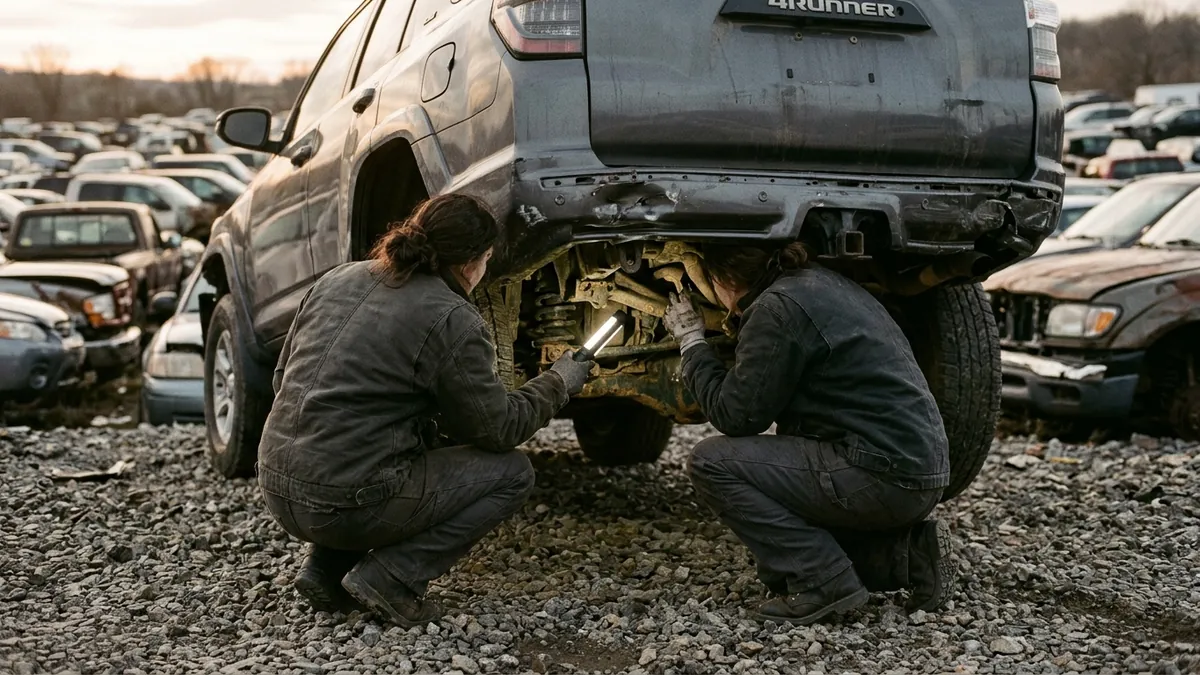
The listing tells you less than the title and the history do. Before you bid:
- Decode the VIN with our VIN lookup to confirm the exact trim and engine.
- Read the title type in the listing (salvage, nonrepairable or parts-only, or clean). It decides whether the car can ever be registered.
- Pull an NMVTIS report. The federal title database records state brands and insurer total-loss reports, though the program warns its data is not complete.
- Read the auction's terms on inspection, payment deadlines, pickup windows, and storage charges.
- Price the whole job, not just the bid: buyer fees, any broker fee, towing or transport, title fees, and repair parts.
Is a salvage auction the right place to buy parts?
If you need one part, a salvage auction is usually the long way around. You buy the entire vehicle, pay to move it, and then own a shell you have to dispose of. A local auto salvage yard or U-pull yard sells the part alone.
Start by searching yard inventory online, which our guide to searching junkyard inventory walks through, and compare self-service and full-service yards to decide whether you want to pull the part yourself.
How to find a salvage yard near you
Our salvage yard directory is the shortcut for a "salvage yards near me" search: it lists yards by state and city, including junkyards that sell parts and yards that buy cars. If you are in Texas, the Texas hub lists yards across the state. Call ahead to ask about inventory, pricing, and whether they pull parts for you. If the yard types are new to you, our guide to junkyards, salvage yards, and wrecking yards explains which kind sells what.
If you still want a whole salvage car, your next step is to read the buyer terms for the specific auction location, then confirm with your state DMV what you can do with the title type in the listing before you bid.
This is general information, not legal advice. Rules change; confirm with your state DMV and the auction's current buyer terms before you bid.
Sources
- Copart, Inc.: Annual Report on Form 10-K for the fiscal year ended July 31, 2026 (accessed October 2026)
- RB Global, Inc.: Annual Report on Form 10-K for the year ended December 31, 2025 (accessed October 2026)
- Texas DMV: Salvage/Nonrepairable Motor Vehicle Manual (January 2026) (accessed October 2026)
- U.S. Department of Justice, NMVTIS: Information for Consumers (accessed October 2026)