Pull-A-Part Guide: Locations, Price List, and How to Shop
Pull-A-Part prices every part the same regardless of the car it comes from, charges $2 to get in, and lets you set text alerts for the car you need. Here is how to shop it well.
Key Takeaways
- Pull-A-Part runs 35 stores in 16 states, counting its 9 U-Pull-&-Pay yards. The 26 Pull-A-Part-branded stores are in 13 states, mostly in the South and Midwest.
- Admission is $2 ($1 for VIP members) and free for veterans, service members, and local first responders with ID, as of October 2026.
- Each part has one price regardless of make, model, or year, but prices and fees differ by store. An alternator totaled $39.49 in Atlanta South and $32.70 in Pittsburgh, core included.
- Most parts include a 30-day warranty for exchange or store credit. An optional plan adds 90 more days on eligible parts.
Pull-A-Part is a self-service used auto parts chain based in Atlanta: you pay $2 to enter, find the car on a stand, remove the part with your own tools, and pay a flat posted price at the register. The chain sells cars by the lot rather than individual parts, so its online tools show which vehicles are in the yard, not which parts remain on them.
What is Pull-A-Part and where are its locations?
Pull-A-Part is a family-owned company headquartered in Atlanta that opened its first stores in 1997. Its about page says it operates 35 self-service stores in 16 states. That count includes U-Pull-&-Pay, a Pull-A-Part company whose 9 yards are in Arizona, Colorado, Florida, New Mexico, and Texas. Both brands share one website system, one price-list format, and one VIP Club.
The 26 Pull-A-Part-branded stores break down like this as of October 2026:
| State | Pull-A-Part stores |
|---|---|
| Georgia | 4 (Atlanta East, Atlanta North, Atlanta South, Augusta) |
| Ohio | 4 (Akron, Canton, Cincinnati, Cleveland West) |
| Louisiana | 3 (Baton Rouge, Lafayette, New Orleans West) |
| Tennessee | 3 (Knoxville, Memphis, Nashville) |
| Alabama | 2 (Birmingham, Montgomery) |
| North Carolina | 2 (Charlotte, Winston-Salem) |
| Texas | 2 (Corpus Christi, El Paso) |
| Arizona, Indiana, Kentucky, Mississippi, Pennsylvania, South Carolina | 1 each (Tucson, Indianapolis, Louisville, Jackson, Pittsburgh, Columbia) |
The company says each location holds roughly 2,000 or more cars, with new arrivals placed in the yard daily.
How Pull-A-Part works, step by step
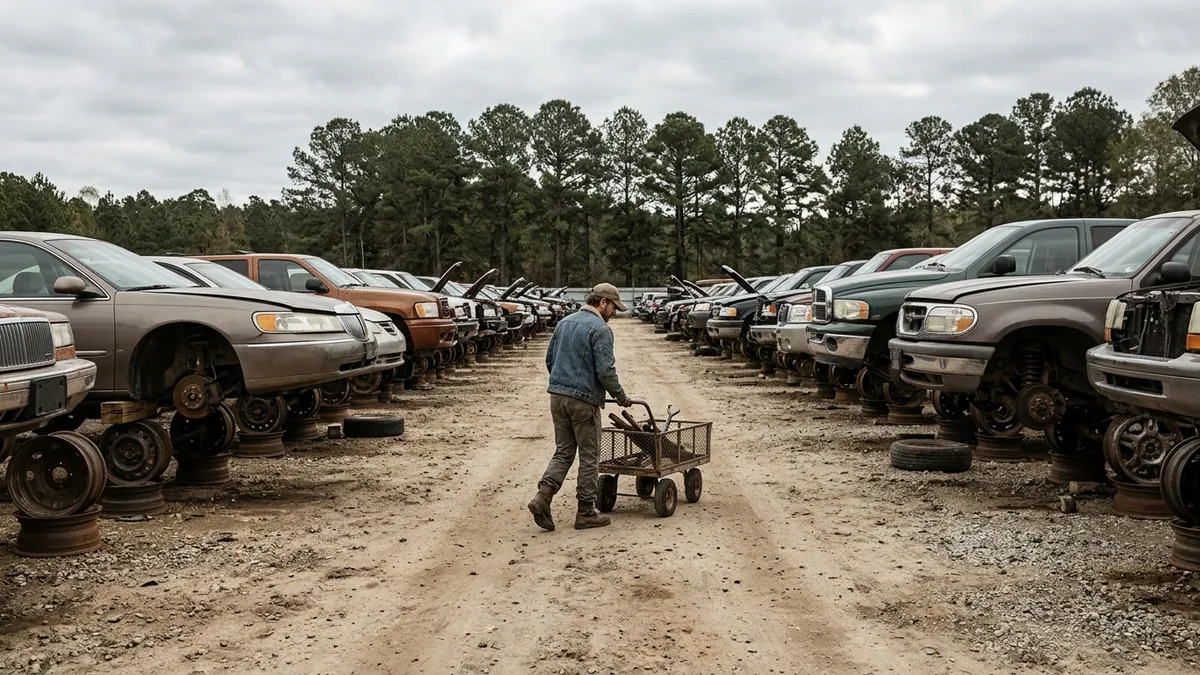
Pull-A-Part inventories vehicles, not parts, and its FAQ is direct about the consequence: you cannot call a store to ask whether a part is still on a car, because staff are not assigned to search the yard. You find the car, then go see what is left on it.
- Search the vehicle inventory online or at the kiosks inside each store. Advanced Search covers several locations, years, or models at once.
- Run Parts Interchange to list other makes and models that used the same part. Staff can also look up interchange and tell you where each matching car sits in the lot.
- Pay admission and sign the waiver. You must be 16 or older, and you may be asked for a government-issued photo ID to prove it.
- Pull the part. Cars are on stands, so leave the jack at home. The yard supplies an A-frame and hoist for engines and transmissions, plus a lift to move them to the exit.
- Pay at the register with cash or a major credit card (Visa, Mastercard, American Express, Discover). Checks aren't accepted.
The posted rules are short. No jacks, no torches, and no working on your own car anywhere on the property, parking lot included. Stores are open 7 days a week and close only on Thanksgiving, Christmas Eve, and Christmas Day, though hours can change in bad weather. Our junkyard holiday hours guide covers how other chains handle the same dates.
How Pull-A-Part prices parts
Pull-A-Part says its pricing is "intentionally simple": each specific part has the same price regardless of the make, model, or year it comes from. A starter from a luxury sedan costs the same as one from an economy car at the same store. Prices do differ between stores, so check your store's list on the official Pull-A-Part parts pricing page.
Each line on the list has five columns:
- Base price for the part.
- Environmental and services fee, which varies by store. In Atlanta South it ran about 12% of the base price; in Pittsburgh about 2%.
- Cash refundable core charge, paid back in cash when you return the old part with your receipt within 30 days.
- Total price, which adds those three and includes the free 30-day warranty. Local taxes are extra.
- Part Assurance Plan, the optional extra 90-day warranty, priced separately on eligible parts.
Here is what two stores listed as of October 2026. Prices change and vary by location.
| Part | Atlanta South, GA total | Pittsburgh, PA total | Core charge (both) |
|---|---|---|---|
| Alternator (non-hybrid) | $39.49 | $32.70 | $9.25 |
| Starter | $39.17 | $31.70 | $8.25 |
| Radiator (without shroud) | $56.70 | $58.47 | $8.50 |
| Headlight assembly (non-HID) | $42.36 | $38.51 | none |
| Automatic transmission with converter | $169.48 | $159.59 | $27.00 |
| Engine with accessories | $297.10 | $358.91 | $57.00 |
Engines show the widest spread. The same "engine with accessories" line carried a base price of $213.99 in Atlanta South and Tucson, $275.99 in Phoenix, and $295.99 in Pittsburgh. If you are shopping for a big-ticket part and live between two stores, compare both lists before you pick a yard.
Pull-A-Part warranty, returns, and store credit
Most Pull-A-Part parts include a 30-day warranty at no extra charge. Within 30 days of purchase, with your receipt, you can exchange a part for a matching one or return it for store credit good at any location. Cash refunds are limited to core deposits. The part must be the original, still carry the Pull-A-Part marking, and not be disassembled, and the store manager makes the final call on every return.
A few exceptions apply. Tires and wheels get only a 3-day limited warranty, for exchange or store credit. Hybrid batteries, used coolant, washer fluid, fuses, and thrift store items are sold as is.
For an extra fee, eligible parts can be covered for 120 days total. The price list calls this the Part Assurance Plan, and on the lists we checked it cost about 15% of the base price. Core returns stay limited to 30 days even with the plan.
Store credit does not expire. VIP Club members also get receipts and warranty dates stored online, which takes care of the usual reason a return gets refused: a lost receipt.
Parts Pull-A-Part does not sell
Pull-A-Part does not resell driver or front passenger airbags or related components, other than horn covers, citing the large number of vehicles under airbag recalls. It also removes catalytic converters during vehicle processing, so none are for sale at any Pull-A-Part or U-Pull-&-Pay store. Side curtain airbags and airbag covers still appear on its price lists. Our guide on whether you can buy a used airbag covers the safety and legal side, and Pull-A-Part itself suggests checking any donor vehicle's VIN for open recalls at nhtsa.gov.
How to check Pull-A-Part inventory before you go
Pull-A-Part has four online tools, and all of them also run on the in-store kiosks:
- Vehicle Search, by store, make, model, and year. Advanced Search handles multiple stores, years, or models.
- New On Yard, which lists cars set in the last 24 hours, 48 hours, or 7 days. Fresh arrivals have the most parts left, so this is the one to check first.
- Parts Interchange, which finds other makes and models that may share your part, filtered by style, part category, part, and fitment.
- Notify Me, a free text or email alert (or both) when a vehicle matching your criteria arrives. Text alerts need a U.S. wireless number, and message rates apply.
A search result only tells you the car is on the lot. Go early on the day a car is set if the part you need is popular, and bring a backup option from the interchange list.
Tips for shopping Pull-A-Part
- Join the VIP Club. It's free, cuts admission to $1, adds 3% of your used-parts subtotal as rewards credit that never expires, and keeps your receipts online.
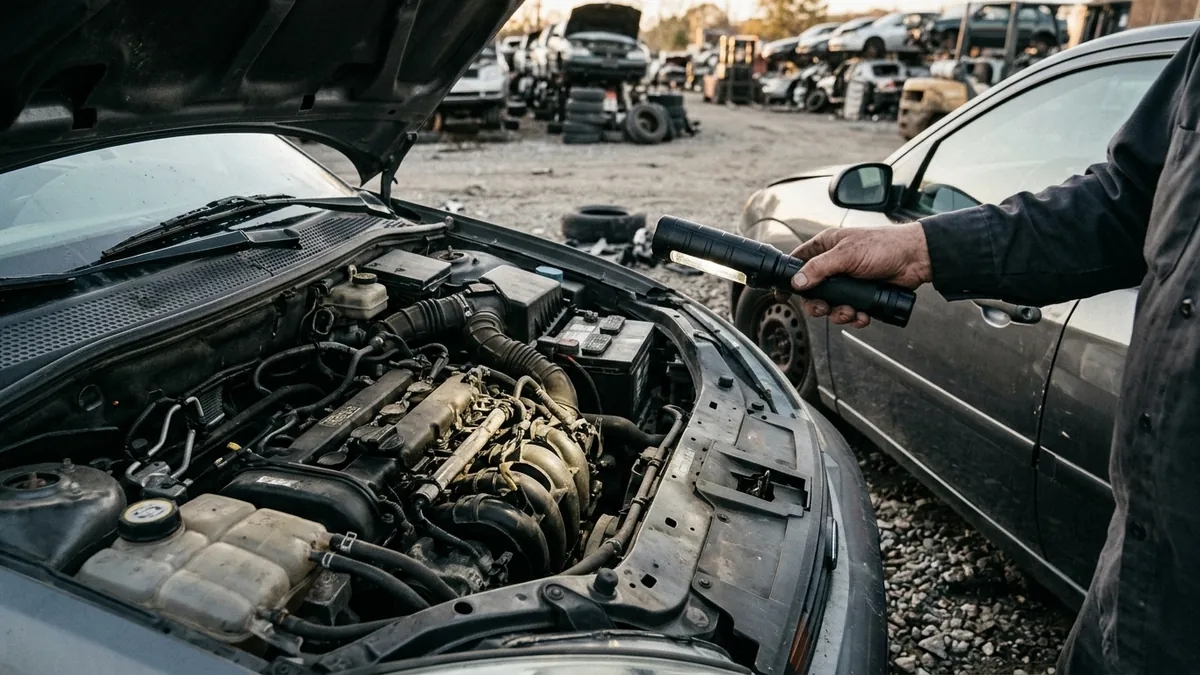
- Pick the best donor, not the first one. The price is the same for every car, so the lowest-mileage, cleanest example costs nothing extra.
- Keep the old part for the core. Core charges ran $8.25 to $57 on the lines above, and you only get them back within 30 days.
- Bring a complete tool kit, because at a self-service yard you remove every part yourself. Our step-by-step on removing an alternator at the junkyard shows the typical tool list for a common first job.
Does Pull-A-Part buy junk cars?
Yes. Pull-A-Part quotes by phone or online form, tows the car for free once you agree on a price, and pays cash when the driver picks it up. Its quote form defines a complete car as one with no major mechanical components missing, including the catalytic converter, engine, and transmission, and with all doors, hood, and trunk intact. Missing parts lower the offer.
How to find a Pull-A-Part or another self-service yard near you
If you searched "pull a part near me," the chain's store locator covers both brands within 500 miles of a ZIP code. To compare it with independent U-pull yards nearby, use our state hubs; the biggest Pull-A-Part clusters are in Georgia, Ohio, and Tennessee. If you live near both chains, our Pick Your Part guide shows how that chain's 90-day refund guarantee compares. For everywhere else, the salvage yard directory lists yards by state and city.
Your next step: pull up your nearest store's price list, set a Notify Me alert for your model, and plan the trip for the morning after a match arrives.
Sources
- Pull-A-Part: About Pull-A-Part (accessed October 2026)
- Pull-A-Part: Locations (accessed October 2026)
- Pull-A-Part: Frequently Asked Questions (accessed October 2026)
- Pull-A-Part: How It Works (accessed October 2026)
- Pull-A-Part: Parts Pricing (Atlanta South, Pittsburgh, Tucson, and Phoenix lists) (accessed October 2026)
- Pull-A-Part: Notify Me (accessed October 2026)
- Pull-A-Part: VIP Club (accessed October 2026)
- Pull-A-Part: Sell My Junk Car: How It Works (accessed October 2026)