Pick-n-Pull Guide: How It Works, Prices, and Tips
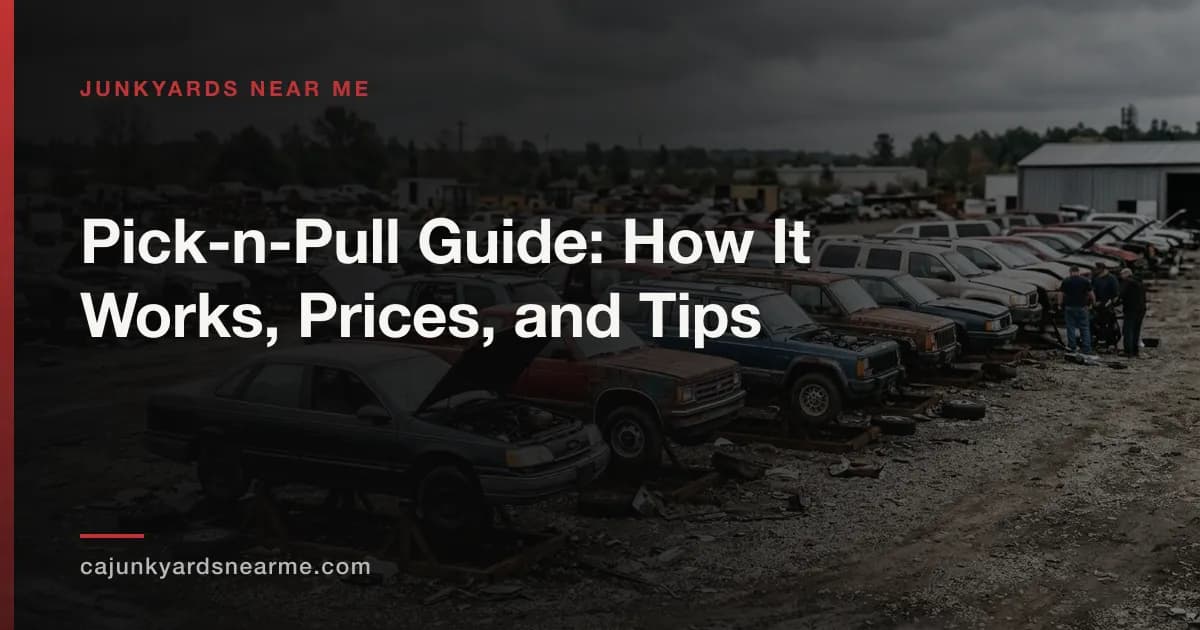
Pick-n-Pull runs 48 self-service yards where you pull parts yourself at fixed, posted prices. Here is how a visit works, what it costs, and what the return policy actually covers.
Key Takeaways
- Pick-n-Pull lists 48 stores (44 in the U.S., 4 in Canada) across 15 states as of October 2026, with California holding 19 of them.
- Prices are fixed and posted per store, and they differ by location. A car alternator was $33.99 in Fresno and $32.99 in Fort Worth, each plus a $9.99 core deposit.
- Every part gets a 30-day exchange or store credit with receipt. WarrantyPLUS adds 12 months on select parts for 30% of the part price.
- Bring your own hand tools. No jacks, torches, body saws, or batteries, and nobody under 16 in the yard.
Pick-n-Pull is a chain of self-service junkyards selling used auto parts: you pay a small admission fee, walk rows of cars set on stands, remove the part yourself with your own tools, and pay a fixed price at the register. Each store publishes its own price list online, every part comes with a 30-day exchange, and you can search inventory by make and model before you leave home.
What is Pick-n-Pull and where are the stores?
Pick-n-Pull operates 44 U.S. and 4 Canadian self-service stores, according to its company profile and locations page as of October 2026. The chain is a subsidiary of Radius Recycling and says its first store opened in Stockton, California, in 1984. Stores stock cars, vans, and light trucks, foreign and domestic, and the company says a typical store averages more than 1,200 vehicles on the lot.
California has by far the most locations. The rest are spread across 14 more states and two Canadian provinces:
| State or province | Pick-n-Pull stores (October 2026) |
|---|---|
| California | 19 (Bay Area, Sacramento Valley, Central Valley, North Coast) |
| Washington | 5 (Arlington, Lynnwood, Tacoma, Tumwater, Vancouver) |
| Missouri | 4 (two in Kansas City, Springfield, St. Louis) |
| Texas | 3 (Dallas South, Dallas South Central, Fort Worth) |
| Nevada, Oregon | 2 each |
| Arkansas, Georgia, Illinois, Indiana, Kansas, Ohio, Rhode Island, Utah, Virginia | 1 each |
| Alberta, British Columbia | 3 and 1 |
Two naming traps are worth knowing. Pick-n-Pull's own site states it is not affiliated with Pick-n-Pull San Antonio, which runs separately. And several Radius Recycling metal yards (in Kentucky, Maine, Massachusetts, Oregon, Washington, and British Columbia) appear on the same map because they accept vehicles, but they do not sell parts.
How a Pick-n-Pull visit works, step by step
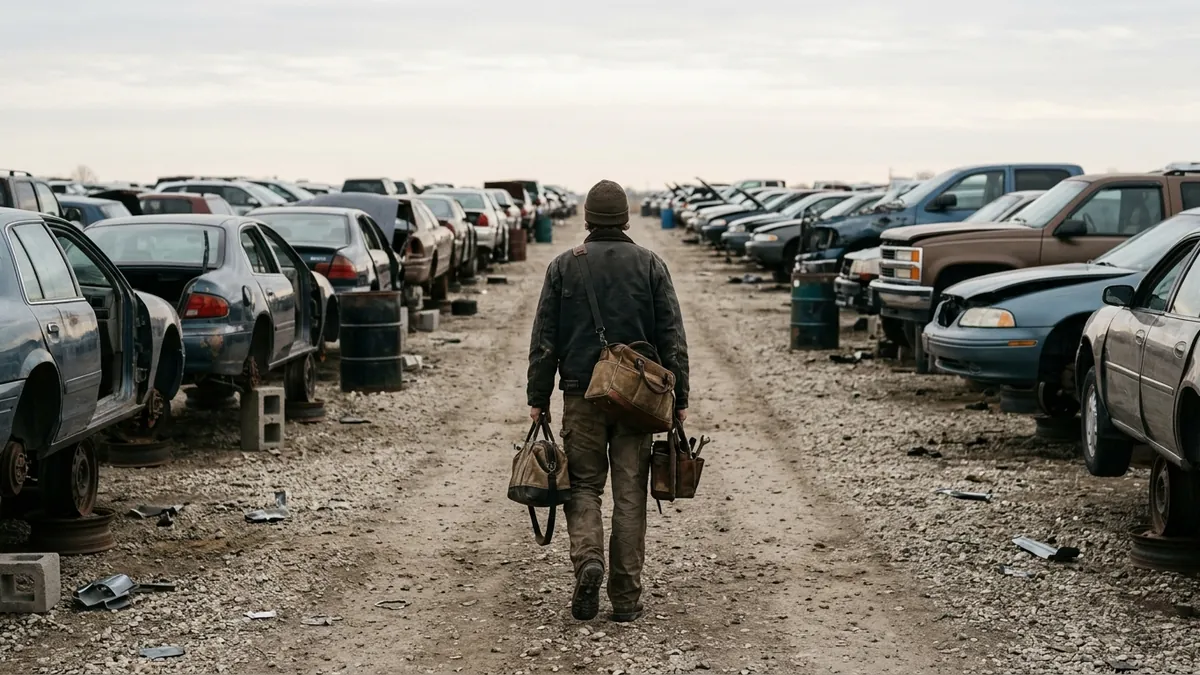
Every store runs the same sequence, and the first step happens at home. These steps follow the process on the company profile page.
- Search inventory online. Pick a make and model, add a ZIP code and distance, and the results list matching cars by store, with year, row number, and the date each car was set in the yard.
- Pay admission and sign in. Every store charges an admission fee, and toolboxes, bags, and other containers get checked on the way in.
- Ask for a yard map and an interchange list. Staff can run the in-store parts interchange (the site calls it Tracker, The Rapid Parts Finder) to show which other models used the same part.
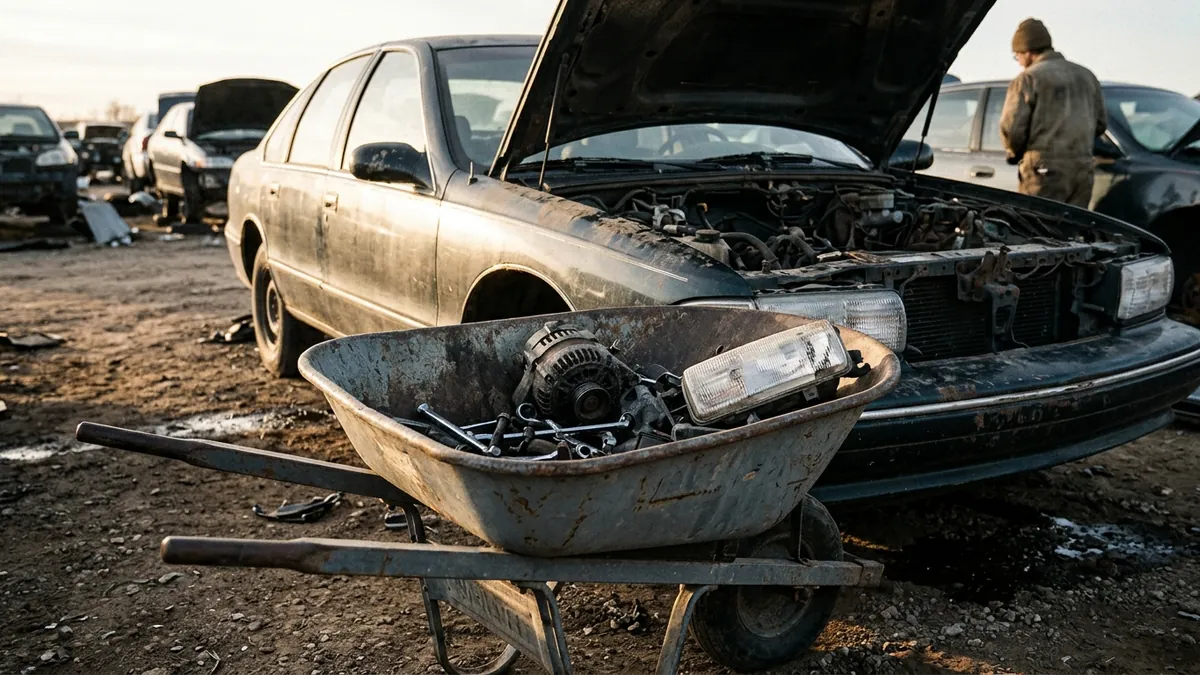
- Find the car and pull the part. Cars sit on supports, so you never need a jack, and wheelbarrows and engine hoists are free to use.
- Pay at the register. The cashier prices the part from the posted list and adds any core deposit plus the environmental fee. Returns require the original Pick-n-Pull marking, so check that your part is marked before you leave.
If the model you need is not on the lot, leave the year field blank or ask the counter for an interchange list. Our guide to searching junkyard inventory online covers how to widen a search when the exact car is not in stock.
Pick-n-Pull rules: what you can and cannot bring
The safety page bans jacks, torches, body saws, batteries, battery jump packs, cores with oil, glass containers, alcohol, and smoking. No one under 16 is allowed in the yard, and children in the waiting area must be supervised by an adult the customer brings. Parts are not allowed inside the store except when you are buying them or returning parts and cores.
The posted safety tips are practical: wear gloves and closed-toe shoes, stay in the walkways, watch for uneven ground and moving equipment, and never move the wheel stands under a car. Bring a socket set, breaker bar, screwdrivers, pliers, and penetrating oil at a minimum. Our list of tools you need for a salvage yard run covers the rest, including what to leave in the truck.
How much do parts cost at Pick-n-Pull?
Pick-n-Pull uses fixed pricing: a part type costs the same no matter which car it comes off, and there is no haggling. Each store has its own price list, though, and the lists don't match from store to store. Check the list for your store on the official Pick-n-Pull part pricing page before you go.
Here is what two stores listed for common car parts as of October 2026. Prices change and vary by location, so treat these as examples, not quotes.
| Part (car) | Fresno, CA | Fort Worth, TX | Core deposit |
|---|---|---|---|
| Alternator | $33.99 | $32.99 | $9.99 |
| Starter | $30.99 | $30.99 | $9.99 |
| Radiator (without shroud) | $65.99 | $69.99 | $9.99 |
| Computer brain box | $62.99 | $60.99 | $4.99 |
| Headlight assembly | $34.99 | $34.99 | none |
| Door assembly with hinges | $84.99 | $87.99 | $8.99 |
| Automatic transmission/transaxle | $236.99 | $254.99 | $29.99 |
| Engine, complete | $379.99 | $399.99 | $64.99 |
Three charges sit on top of the shelf price. The core deposit comes back in cash if you return your old part (or a matching one) to the same store within 30 days. The environmental fee shows up on every receipt to offset disposal of hazardous materials. Then sales tax. Admission is separate and paid at the gate.
Pick-n-Pull return policy and WarrantyPLUS
Every Pick-n-Pull part except tires, builder cars, and thrift items comes with a 30-day exchange. You return it to the store where you bought it, within 30 days, with the original receipt, and you get a matching part or store credit good at any Pick-n-Pull. Cash refunds are not offered except on core deposits. The part must still carry its Pick-n-Pull marking and must not be taken apart, and the exchange is for the original buyer only.
Used tires follow a shorter rule: they can be exchanged within 3 days if they have not been driven on. All sales of builder vehicles and thrift store items are final, and the policy page states that parts are otherwise sold as is.
WarrantyPLUS is the optional extension. You add 30% to the part price at checkout and the part is covered for 12 months after the 30-day exchange ends. Coverage is limited to a listed set of parts, including alternators, starters, A/C compressors, engines with accessories, transmissions, transfer cases, radiators, rack-and-pinion units, power steering pumps, and the engine computer. If the part fails, you pull a replacement yourself at no charge; if no replacement is available, you get store credit for the base part price. Labor is never covered, and you need the receipt plus the warranty brochure to make a claim. If you buy WarrantyPLUS on a core item, your core refund window stretches to the full warranty period.
On a $236.99 transmission, WarrantyPLUS adds about $71. On a $30.99 starter it adds about $9. Before you pay for coverage, test what you can at the counter; our guide to Hollander interchange numbers also helps you confirm fit before you pull a part that will not bolt up.
How to check Pick-n-Pull inventory before you go
The Check Inventory tool on picknpull.com searches every store by make, model, optional year, and a ZIP code radius from 10 miles to unlimited. Results show each matching vehicle with a photo, year, make, model, the row it sits in, and its set date. The home page banner says the search is powered by Row52 and lets you view photos, see VIN data, and set alerts for cars that have not arrived yet.
Read the fine print on the results page. It says part availability, vehicle condition, and yard position can change because inventory turns over daily, and that most wheels, rims, and tires shown in photos are not available in the yard. A car listed this morning may already be missing the part you want by afternoon.
Tips that save time and money at Pick-n-Pull
- Look at the set date. A car set in the yard this week has had fewer visitors than one set two months ago, so its alternator and headlights are more likely to still be there.
- Go early. The Fresno store, for example, lists weekday hours of 9 a.m. to 6 p.m. and weekend hours of 8 a.m. to 6 p.m., and the yard closes 30 minutes before the store does. Your store's page has its own hours and holiday changes.
- Sign up for Toolkit Rewards. It's free, pays roughly 1 point per dollar on parts and admissions, and 350 points earns a $20 reward certificate. Core charges and environmental fees don't count.
- Bring your old part if you can. You can compare connectors and mounting points before you pay, and returning it (or a matching core) within 30 days gets your core deposit back in cash.
- Keep the receipt with the part. No receipt, no exchange, so snap a photo of it before you leave the lot.
Does Pick-n-Pull buy junk cars?
Yes. Pick-n-Pull's Cash For Junk Cars service gives an instant online offer from a license plate, VIN, or year, make, and model. You accept, schedule a pickup, and hand over the keys and title in exchange for a check. Towing is free inside each store's local towing zone, and the company says you may be able to drop the car at a store and be paid the same day. It buys running and non-running vehicles. Compare at least one other offer first; our guide to junkyards that buy cars near you explains what drives the number.
How to find a Pick-n-Pull or another self-service yard near you
If you live in a Pick-n-Pull state, start with the store list on picknpull.com and the store's price page. Pick-n-Pull is only one answer to a "pick a part near me" search, though. Our state hubs list every yard we track, including independent U-pull yards that never show up in chain searches. Most Pick-n-Pull stores are in California junkyards, followed by Washington and Texas. Outside those areas, browse the full salvage yard directory by state and city, then call ahead to confirm admission, hours, and whether the yard is self-service.
Your next step: pull up the price list for the store you plan to visit, search its inventory for your model, and write down the row numbers before you load the toolbox.
Sources
- Pick-n-Pull: Company Profile (accessed October 2026)
- Pick-n-Pull: Locations (accessed October 2026)
- Pick-n-Pull: Used Auto Parts Pricing (Fresno and Fort Worth lists) (accessed October 2026)
- Pick-n-Pull: Policies (accessed October 2026)
- Pick-n-Pull: WarrantyPLUS (accessed October 2026)
- Pick-n-Pull: Safety (accessed October 2026)
- Pick-n-Pull: Check Inventory (accessed October 2026)
- Pick-n-Pull: Toolkit Rewards (accessed October 2026)
- Pick-n-Pull: Cash For Junk Cars (accessed October 2026)