Salvage Title vs Rebuilt Title: What Each Means for Buyers and Sellers
A salvage title means the car cannot legally go back on the road yet. A rebuilt title means it has been repaired and passed the state's checks, but the brand never goes away. What that means when you sell or buy.
Key Takeaways
- A salvage title marks a damaged car that cannot be registered or driven until it is repaired and retitled. A rebuilt title marks one that has been.
- Rebuilding takes paperwork. In Texas it means a Rebuilt Vehicle Statement (VTR-61) and a $65 Rebuilt Salvage Fee on top of the title fee, per TxDMV's January 2026 manual.
- The rebuilt brand is permanent. Texas carries it to every later title, and NMVTIS keeps it on the vehicle's record.
- A nonrepairable title is a third category: parts and scrap only. In Texas, one issued after September 1, 2003 can never be rebuilt.
The difference is whether the car has been legally put back on the road. A salvage title follows severe damage or an insurance total loss, and the car cannot be registered until it is repaired. A rebuilt title comes after that repair and the state's checks. It allows registration, but the brand stays on the record permanently.
What is a salvage title?
A salvage title is a state ownership document for a vehicle that has been damaged badly enough, or declared a total loss, that the state will not register it as is. Each state writes its own definition, which is why the same wreck can be branded differently depending on where it happened.
Texas and California show how far apart the definitions can be. Texas defines a salvage motor vehicle as one damaged or missing a major component part to the extent that the cost of repair, including parts and labor, exceeds the vehicle's actual value immediately before the damage. Among other exclusions, TxDMV leaves out vehicles where an insurer paid a claim only to repair hail damage.
California's test is about reporting, not repair cost: a salvage vehicle is one previously reported to the DMV as a total loss by the owner or the insurance company. A junk vehicle is one previously reported to the DMV as dismantled.
Some brands carry extra detail. TxDMV notes that salvage and rebuilt title brands may also include "FLOOD DAMAGE" when the vehicle's condition was caused exclusively by water, and that remark is carried forward on later titles.
For a seller, the point is that a salvage title is still a title. It proves ownership, and a licensed auto salvage yard can buy the car with it the same way it buys a car with a clean title.
What is a rebuilt title?
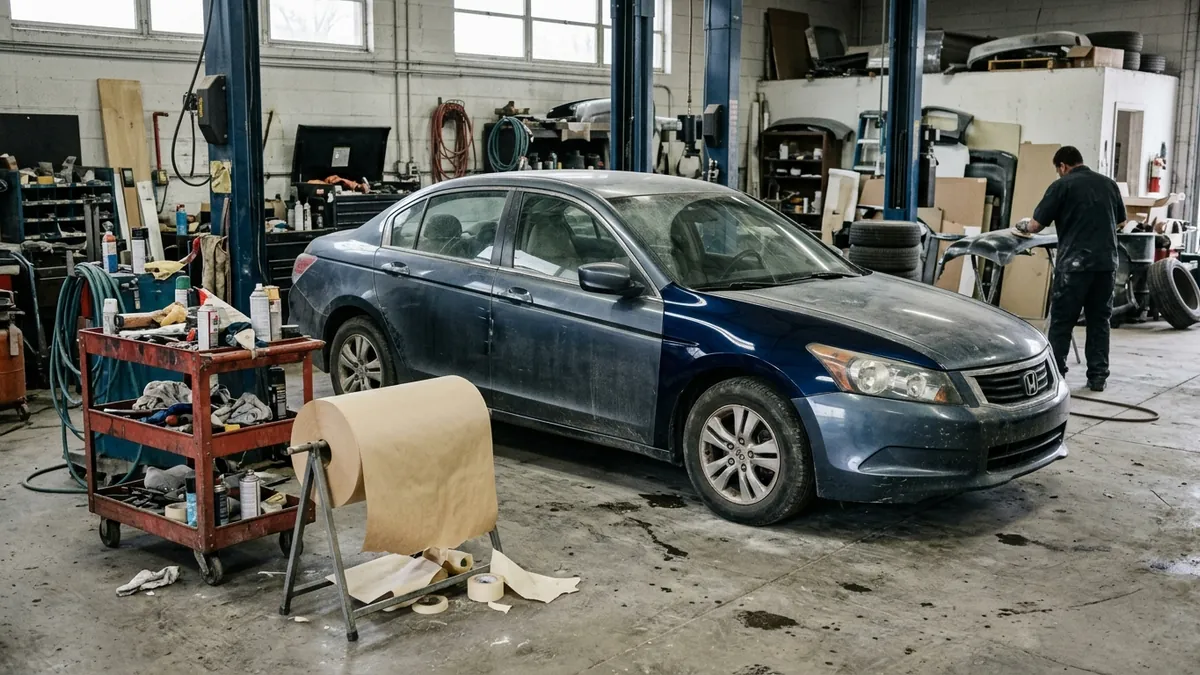
A rebuilt title is a regular certificate of title issued for a former salvage vehicle after it has been repaired and passed the state's requirements. It allows registration and road use, and it carries a brand that tells every later owner the car's history.
Texas spells out the process in its Salvage/Nonrepairable Motor Vehicle Manual (January 2026):
- The owner files an Application for Texas Title and/or Registration (Form 130-U) at a county tax office for a title branded "Rebuilt Salvage."
- The application includes a Rebuilt Vehicle Statement (Form VTR-61) describing the repairs and listing the identification numbers of major component parts used.
- The owner pays the regular title application fee plus a $65 Rebuilt Salvage Fee.
- Registration is not issued until the vehicle has been rebuilt, inspected, and the rebuilt title application is filed.
California's route runs through different forms. The DMV's page for revived salvage vehicles lists an Application for Title or Registration (REG 343), a vehicle verification (REG 31) or CHP Certificate of Inspection (CHP 97C), and an electronic Vehicle Safety Systems Inspection certificate, among other documents. Once those are met, the DMV can issue a branded title and registration.
Salvage vs rebuilt vs nonrepairable: side-by-side
Many states sort damaged vehicles into tiers like these under different names. The table uses Texas's terms because its manual defines all three clearly.
| Question | Salvage title | Rebuilt Salvage title | Nonrepairable title |
|---|---|---|---|
| Can it be registered and driven? | No, not until rebuilt, retitled and registered | Yes | No |
| Can it be repaired and retitled? | Yes | Already done | No, if issued on or after Sept. 1, 2003 |
| What is it worth to a junkyard? | Parts and scrap value, like any junk car | Depends on condition; it is a road-legal car | Parts and scrap value |
| Does the brand follow the car? | Yes | Yes, carried forward on later titles | Yes |
Other states may label the tiers "salvage," "rebuilt," "reconstructed," "junk," or "parts only." Read the brand words printed on the title itself, then check what they mean on your state DMV's site.
How does NMVTIS track salvage and rebuilt titles?
The National Motor Vehicle Title Information System is the federal database that ties a VIN to its title history across states. It is run under the U.S. Department of Justice, and it collects data from state titling agencies, insurance carriers, and auto recyclers, junk yards, and salvage yards.
Junk and salvage yards have a monthly reporting duty under federal rules at 28 CFR 25.56. Their reports include the VIN, the date the yard obtained the vehicle, who it came from, and whether the vehicle was crushed, disposed of, or intended for export. Businesses that handle fewer than five vehicles a year are exempt.
Read an NMVTIS report with two things in mind. Brands are permanent: once a state applies one, such as salvage or flood, NMVTIS keeps it on the record. But coverage is incomplete. The program itself warns that a clean result can be a false negative, and that a vehicle treated as salvage at some point may never have been branded, because brand standards vary by state.
Run the VIN through our free VIN decoder first to confirm the year, make, and model match the title, then buy the NMVTIS report through the Research Vehicle History section of the program's site.

What a salvage or rebuilt title means if you are selling
A salvage-title car you don't plan to rebuild is a junk car with a valid title. Licensed junkyards and scrap yards buy them for the same reasons they buy any end-of-life vehicle: parts and scrap metal. They care more about the car's weight and which parts are still good than about the brand. Our guide to what a junk car is worth in 2026 explains how those offers are built.
A rebuilt-title car is a road-legal vehicle with a disclosed history. Keep the rebuild records, including the parts list on any VTR-61 or your state's equivalent. Buyers pay a fair price more readily when they can see what was replaced.
In Texas specifically, if your insurer paid a total-loss claim and you kept the car, TxDMV's manual says prior registration is invalidated when the record shows the vehicle as owner retained, and the car cannot be registered again until it is rebuilt, inspected, and retitled. Our guide to selling a junk car in Texas covers that state's paperwork in full.
What a rebuilt title means if you are buying
A rebuilt title tells you the car was once a salvage vehicle and that the state accepted its repair paperwork. It does not tell you how good the repair was. Before you buy:
- Pull the NMVTIS report and compare the brand history with the title in hand.
- Ask for the rebuild documents: repair invoices and the parts list with component identification numbers.
- Get an independent inspection that looks hard at the frame, the airbags, and any flood-related brand.
- Call your insurer and lender before you commit. Coverage and financing for branded titles vary by company.
How to find a yard that buys salvage-title cars
Licensed salvage yards and auto recyclers commonly buy branded-title vehicles, so a search for "junk yards for cars near me" should turn up likely buyers. Search the salvage yard directory or open a state hub such as Texas or California, and use our guide to junkyards that buy cars to check a buyer before you call. If you would rather collect offers in one place, start on the sell your junk car page.
Buying or selling, the next step is the same: read the brand words printed on the title, then look them up on your state DMV's site before you agree to a price.
This is general information, not legal advice. Rules change; confirm with your state DMV or titling agency before you sell or buy.
Sources
- Texas DMV: Salvage/Nonrepairable Motor Vehicle Manual (January 2026) (accessed October 2026)
- California DMV: Register Your Revived Junk or Salvage Vehicle (accessed October 2026)
- U.S. Department of Justice, NMVTIS: Information for Consumers (accessed October 2026)
- Legal Information Institute: 28 CFR 25.56 (NMVTIS reporting by junk and salvage yards) (accessed October 2026)