How to Use a VIN Decoder to Find Compatible Parts
The badge on your trunk lid lies. The 17 digits on your dash do not. Here is how to read a VIN well enough to buy the right part the first time.
Key Takeaways
- Digit 8 is the engine code on most domestic and Asian vehicles, and digit 10 is the model year. Those two characters settle most fitment arguments before they start.
- Every interchange qualifier keys on the same four fields: engine, transmission, trim, and assembly plant. All four come out of the VIN.
- Get the donor vehicle's 17-digit VIN in writing for engines, transmissions, ECUs, and airbag modules. No VIN, no sale.
- Used OEM parts run 20-50% of new dealer price, which is only a savings if the part bolts on.
Why the VIN beats the badge on your trunk
The badge tells you what the marketing department called the car. The VIN tells you what the factory actually built. Those are different documents, and only one of them is stamped into the vehicle at the plant.
Here is how the gap opens up. A single model year of one nameplate can leave the line with two or three engine options, two transmissions, and body panels tooled differently at two plants. The trunk lid says nothing about any of that. Worse, badges get swapped: a rear-ended car repaired with a donor trunk lid now wears whatever trim script the donor had. I have watched a buyer order parts for a V6 for twenty minutes because the emblem said V6, on a car whose digit 8 said four-cylinder.
The VIN sits in three places on almost every car: the driver's side dash at the base of the windshield, the door jamb sticker, and the title. Read it off the dash plate. Door stickers are the easiest thing on a car to replace.
What each position in a 17-digit VIN tells you
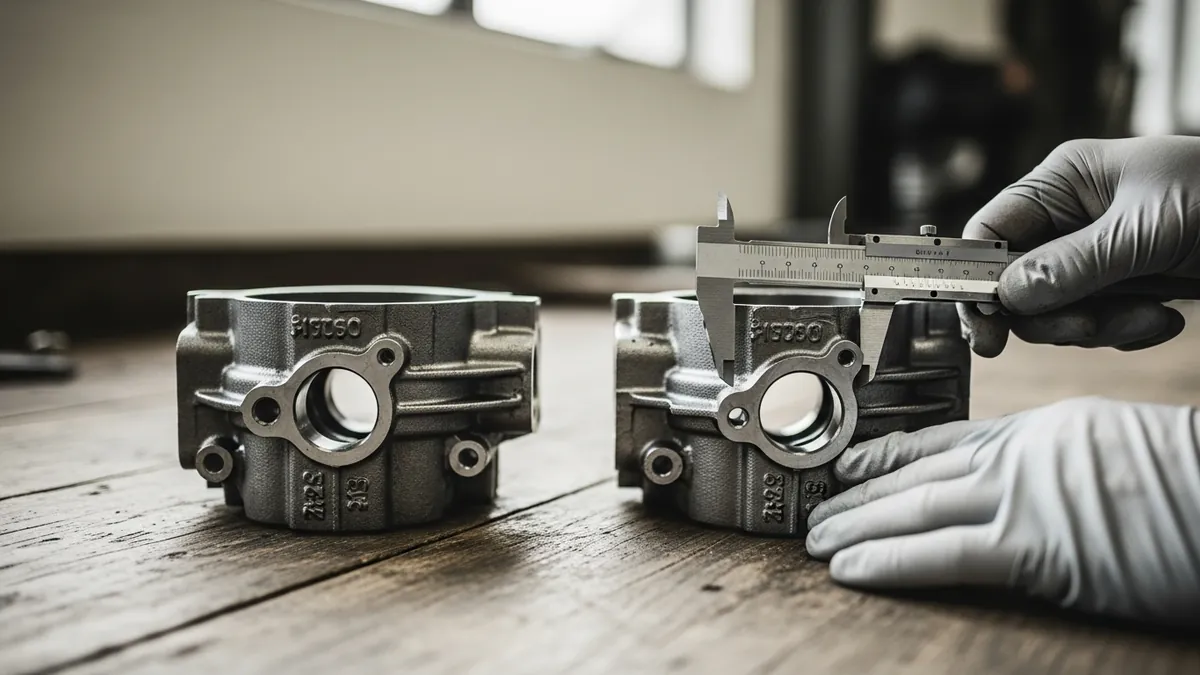
A 17-character VIN splits into three blocks: characters 1-3 identify the manufacturer, characters 4-9 describe the vehicle itself, and characters 10-17 identify the specific unit. For parts work, four of those positions do almost all the labor.
| Position | What it is | Why a parts buyer cares |
|---|---|---|
| 1-3 | World manufacturer identifier | Country, manufacturer, and vehicle type. Separates a truck build from a car build under the same brand. |
| 4-7 | Vehicle attributes | Body style, platform, restraint system, and often trim level. This is where two-door and four-door part numbers diverge. |
| 8 | Engine code | The most useful single character in the number on most domestic and Asian vehicles. Drives intake, exhaust, mounts, sensors, and accessory brackets. |
| 9 | Check digit | A math checksum of the other 16. If it fails, someone mistyped or fabricated the VIN. Free fraud screen. |
| 10 | Model year | Letters and numbers skipping I, O, Q, U, Z. L is 2020, P is 2023, R is 2024, S is 2025, T is 2026. Model year, not sale year. |
| 11 | Assembly plant | The quiet deal-breaker. Two plants building the same model can source different suppliers for glass, wiring, and body stampings. |
| 12-17 | Sequential production number | Build order. Matters when a mid-year running change splits a model year into early and late parts. |
The VIN-first parts search, step by step
Decode your own car first, write the four fields down, and only then start searching. Doing it in the other order is how people end up with a part that is correct for a car they do not own.
- Pull the VIN off the dash plate. Stand outside the windshield on the driver's side and read the 17 characters through the glass. Photograph it. Hand transcription is where 8 becomes B and 5 becomes S.
- Run it through a decoder. Drop the number into our VIN lookup tool and read back the make, model, model year, body, engine, and plant. If the check digit at position 9 does not validate, you copied it wrong — go re-read it before you do anything else.
- Write down digit 8 by itself. That is the engine code on most domestic and Asian vehicles, and it is the field you will be asked for most often. Keep it on your phone next to the full VIN.
- Write down digit 10 and convert it. Model year runs on the skip-letter cycle: L is 2020, M is 2021, N is 2022, P is 2023, R is 2024, S is 2025, T is 2026. A car sold in December 2025 is very often a 2026 model. Search by what digit 10 says.
- Fill in the four qualifier fields. Engine, transmission, trim, and assembly plant. Every interchange lookup keys on some combination of those four, and the VIN gives you all of them: engine from digit 8, transmission and trim from the attribute block at 4-7 plus the door jamb option codes, plant from digit 11.
- Take those four fields into an interchange lookup. A part number alone does not tell you whether a variance code separates your build from the donor's. Our Hollander interchange guide covers how the number, the application range, and the variance codes fit together.
- Watch for platform traps the VIN will flag. Ford CD3 (2006-2012) and CD4 (2013-2020) do not interchange, even where badges and years suggest continuity. Subaru's EJ25 splits into Phase I (1996-1998) and Phase II (1999-2010), and 1999 is a split year — Legacy Outback, SUS, and GT used a Phase II shortblock with Phase I heads. BMW's N52 and N54 share nothing useful: different blocks, different heads, different fuel systems.
- Search yards with the decoded spec, not the badge. Give the counter the year, model, engine code, and transmission family in that order. Find yards through our junkyard directory and call with the four fields already written down.
- Get the donor VIN before you pay. Ask for the full 17 digits, decode them, and confirm digit 8 and digit 11 match yours. Then have it written on the invoice.
The donor VIN rule
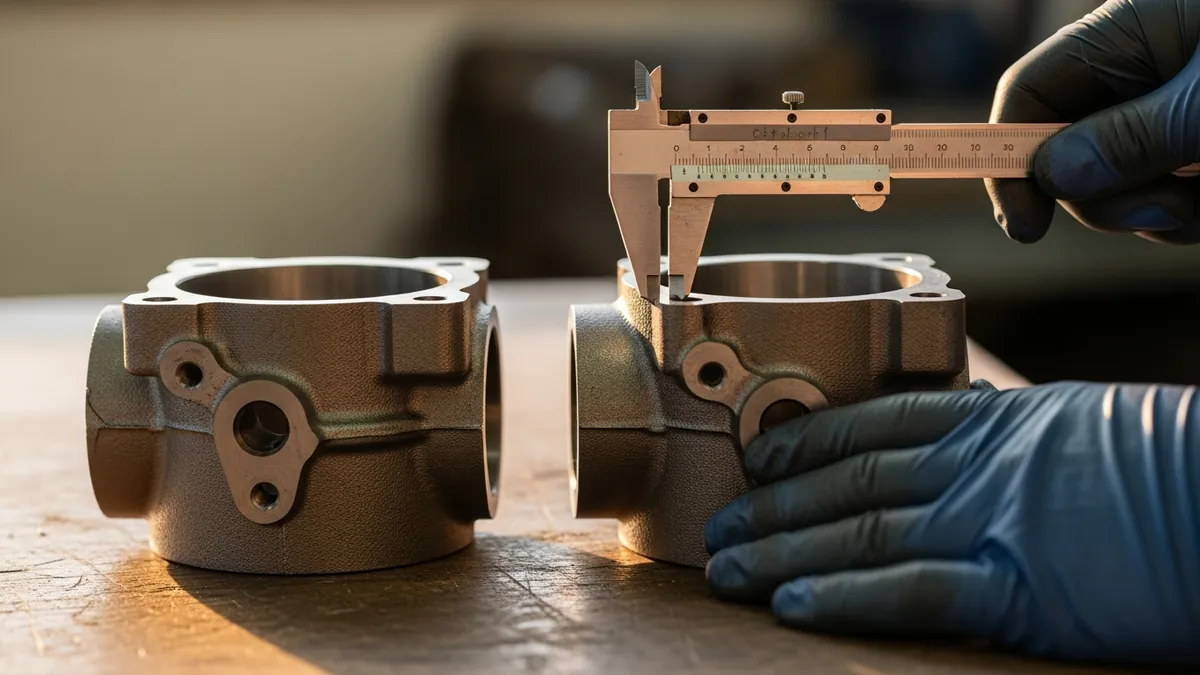
For engines, transmissions, ECUs, and airbag modules, get the donor vehicle's 17-digit VIN in writing before money changes hands. A seller who will not provide it is hiding something — a mismatched build, a part with no traceable history, or in the worst case a component that was never on the car they say it was.
The reasoning is different for each part, and all four reasons are good ones. An engine has to match the code at digit 8 or the accessories will not line up. A transmission has to match both the engine and the final drive, and families like the GM 4L60E, Ford 4R70W and 4R75W, Chrysler 48RE, and Toyota A750E each span years with internal running changes. An ECU is often VIN-locked from the factory and needs the donor number just to be programmed. An airbag module is where the stakes stop being financial: counterfeit airbags are a documented US problem, which is why SRS components belong on the never-buy-used list alongside brake pads and rotors, tires, belts, and fuel pumps and injectors.
Traceability is not a rare ask. The professional end of the salvage trade inventories parts against the donor VIN as a matter of course. A yard that cannot produce one either does not track its inventory or does not want you tracking it.
If you are handling any SRS part yourself, disconnect the negative battery terminal and wait 15 minutes minimum before touching anything. Never probe the yellow SRS connectors. Store a module face up, never face down on a solid surface.
Where the VIN stops helping
The VIN tells you what left the factory. It says nothing about the next 150,000 miles. A 2016 sedan whose VIN decodes to a 2.4-liter four might be running a 2.0 someone swapped in after a rod knock, and the dash plate will never tell you.
So the VIN narrows the search and the physical check closes it. Read the casting numbers on the block and head. Match the tag on the transmission case. Pull the oil fill cap. When you are buying an engine or a transmission from a self-service lot, our guide to buying used auto parts at salvage yards covers the counter questions and the warranty terms worth asking about — full-service yards typically warranty 30 to 90 days, and LKQ offers 6 months.
Selling instead of buying? The same 17 digits set your quote, since year, engine, and trim drive what a yard will pay. Start with our VIN decoder, then get an offer.