Toyota and Honda Parts Interchange: What Actually Crosses
Honda and Toyota shared engines across a lot of models, but "same engine family" is not the same as "same part". Here is what actually bolts up and what will waste your Saturday.
Key Takeaways
- Honda K24 spans four models — Accord 2003-2012, CR-V 2002-2011, TSX 2004-2008, Element 2003-2011. Blocks and rotating assemblies cross; complete engines do not.
- The K24A1, K24A4, and K24A2 differ in cylinder head, camshafts, intake manifold, and compression. Treat the head and everything above it as model-specific.
- Toyota 2GR-FE covers the Camry, Avalon, Highlander, Sienna, Lexus ES 350, and RX 350, but FWD and AWD brackets and oil pans differ. Verify by donor drivetrain.
- Bolt pattern is not fitment. Accord, CR-V, and Camry share 5x114.3; older Corolla uses 5x100. Center bore and offset still have to work.
How Honda and Toyota interchange actually works
Honda and Toyota parts interchange by platform family, not by model name, and the safe rule is that the deeper a part sits in the engine, the more freely it crosses. Blocks, cranks, and rods travel between applications. Heads, cams, and intake manifolds usually do not. Once you understand that split, most of the guesswork disappears.
These two brands dominate import rows at salvage yards for a simple reason: volume. Camrys and Accords are a large share of what rolls into salvage yards, which means you usually have several donor candidates instead of one. That is exactly when interchange knowledge pays, because you get to pick the right donor rather than settling.
If you need the underlying system first, the Hollander interchange guide explains how interchange numbers, application ranges, and variance codes fit together. This post is the platform-specific companion to it.
Honda K24: what crosses and what does not
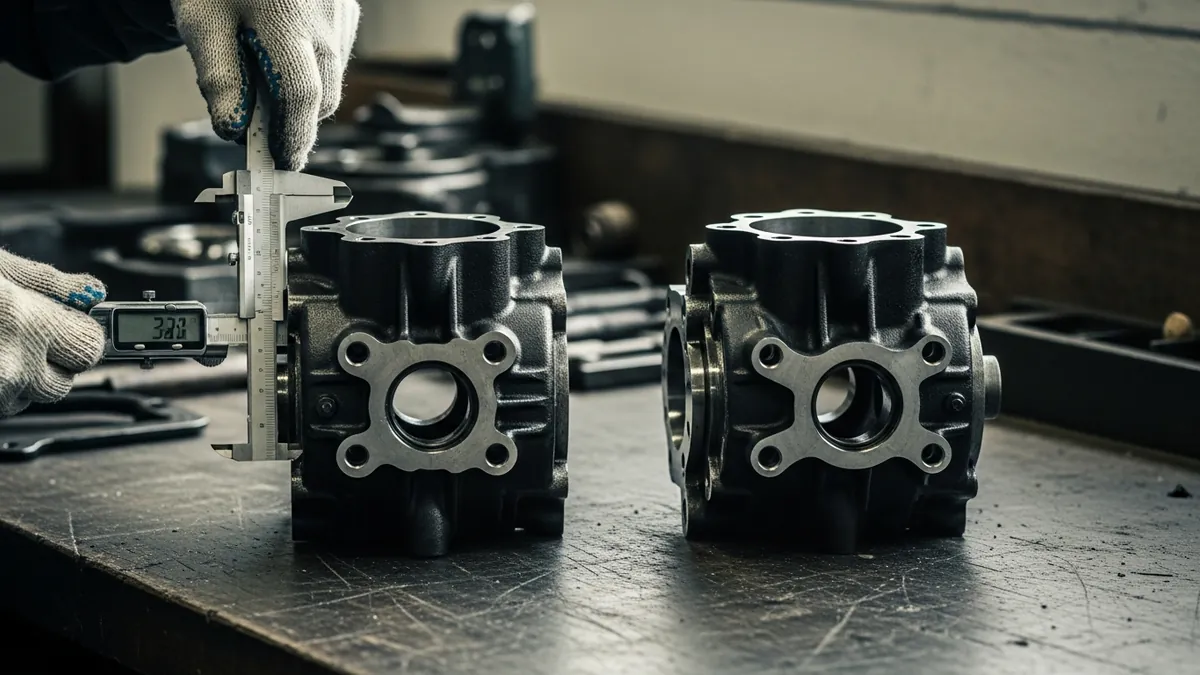
The K24 block is shared across the Accord 2003-2012, CR-V 2002-2011, TSX 2004-2008, and Element 2003-2011, and the bottom end interchanges well within that group. The top end is where Honda split the family. The K24A1 in the CR-V, the K24A4 in the Accord, and the K24A2 in the TSX use different cylinder heads, different camshafts, different intake manifolds, and different compression ratios. Pulling a complete CR-V engine and dropping it in an Accord is not a bolt-in job.
What does cross reliably within those year ranges: the block itself, the crankshaft, the connecting rods, the oil pump, the water pump, the starter, and a good number of accessory brackets. That covers most of what a rebuild actually needs. Alternators and power steering pumps often cross too, but confirm the pulley and connector before you buy.
Verify before you pull
Read the casting number on the block and the head separately, because a previous owner may have already mixed them. Then check digit 8 of the donor's VIN, which is the engine code on most domestic and Asian vehicles and only one of the fields worth reading when you use a VIN decoder to find compatible parts. Two K24 cars from the same model year can carry different engine codes if one is a base trim and one is not. Photograph both the casting number and the full VIN plate on your phone before you start turning bolts. Yard staff are not going to remember which row the car was in an hour later.
Toyota 2GR-FE: one engine, several drivetrains
The 2GR-FE 3.5L V6 appears in the Camry, Avalon, Highlander, Sienna, Lexus ES 350, and Lexus RX 350, and the core engine internals are consistent across those applications. The problem is everything hanging off the outside. Front-wheel-drive and all-wheel-drive versions use different accessory brackets and different oil pans, so a Highlander AWD engine and a Camry FWD engine are not interchangeable as complete assemblies even though the long blocks match.
Before you commit to a donor, write down its drivetrain. Then compare the oil pan profile and the bracket layout against your own car in person, not from a photo in an online listing. The Sienna and the RX 350 both came in FWD and AWD, which makes them the easiest cars to get wrong. Transmission pairing matters as well; Toyota's A750E family is a rear-wheel-drive automatic and does not belong in this conversation at all, so ignore any listing that mixes them up.
Platform family reference table
Use this as a starting shortlist, not a fitment guarantee. Every row still needs a casting number check.
| Platform family | Vehicles and years | What crosses | What to verify |
|---|---|---|---|
| Honda K24 (K24A1) | CR-V 2002-2011 | Block, crank, rods, oil pump, water pump, starter | Head casting number, cam profile, intake manifold |
| Honda K24 (K24A4) | Accord 2003-2012, Element 2003-2011 | Bottom end, many accessory brackets | Compression ratio, VIN digit 8, trim level |
| Honda K24 (K24A2) | TSX 2004-2008 | Block and rotating assembly only | Head, cams, and manifold are TSX-specific |
| Toyota 2GR-FE (FWD) | Camry, Avalon, Sienna FWD, Lexus ES 350 | Long block, heads, most internals | Oil pan profile, accessory bracket layout |
| Toyota 2GR-FE (AWD) | Highlander, Sienna AWD, Lexus RX 350 | Long block, heads, most internals | Pan and brackets differ from FWD; match the donor drivetrain |
Wheels and bolt patterns
The Accord, CR-V, and Camry all run a 5x114.3 bolt pattern, and older Corollas run 5x100. That gives you a wide donor pool on the 5x114.3 side, but the pattern alone tells you almost nothing about whether the wheel will work on your car.
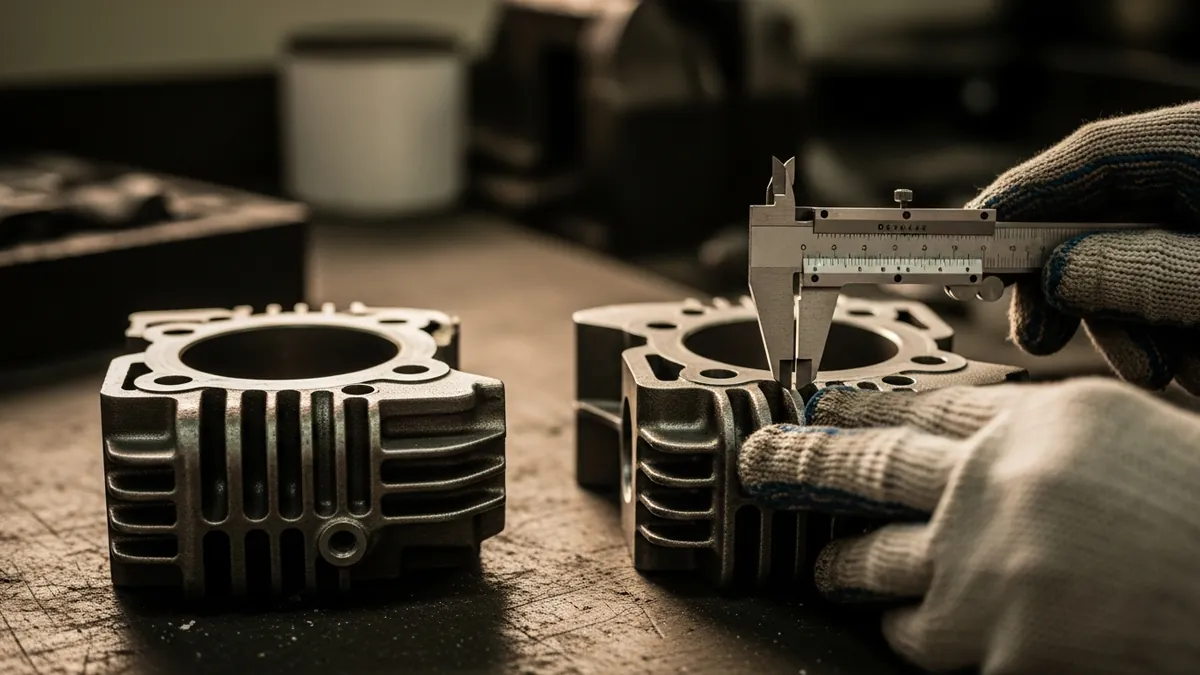
Three things have to line up. The bolt pattern has to match. The hub center bore has to be equal to or larger than your hub, because the hub carries the load and the studs only clamp. The offset has to keep the tire clear of the strut on the inside and the fender lip on the outside. A 5x114.3 wheel with the wrong offset will bolt on and then rub at full lock. Measure the center bore with calipers in the yard and look for the offset stamp on the back of the spoke face, usually marked as ET followed by a number.
The verification habit that saves the trip
Never buy a Honda or Toyota part on model name alone. The sequence below takes about ten minutes per part and prevents the most common wasted trip, which is hauling home a part that matches the listing and not the car.
- Pull your own numbers first. Before you leave home, record your VIN, engine code from digit 8, and the casting number on the part you are replacing.
- Search inventory by year range, not model. Use the platform family ranges above so an Element donor shows up when you are shopping for an Accord part.
- Confirm the donor drivetrain. For any 2GR-FE part, check FWD versus AWD before you touch a bolt.
- Match the casting number in the yard. Photograph the number on the donor part and compare it to your photo, character by character.
- Ask about the return window. Full-service yards typically warranty 30-90 days; self-service sales are often final. Know which one you are in.
Self-service yards charge a $2-$5 entry fee and run 30-60% cheaper than full-service, which makes them the right call once you are confident in the interchange. If you are not confident, pay the full-service premium and let the counter own the fitment. Our junkyard directory lists both types by state, and you can decode your donor's engine code with the VIN lookup tool before you drive anywhere.
One last thing. Cars typically get crushed after 30-90 days on a self-service lot. If you find the right K24 or 2GR-FE donor, pull what you need on that visit. It will not be there next month.