How to Sell a Junk Car Without Keys
Junkyards buy cars with no keys every day. The title transfers ownership; the key never did. What changes is the tow, and sometimes the quote.
Key Takeaways
- A buyer needs proof of ownership, not keys. The signed title is what transfers the car.
- Missing keys mostly change the tow. A locked steering column or a transmission stuck in Park calls for a flatbed or wheel dollies.
- Mention the missing keys when you request the quote, so the number you agree on is the number you get paid.
- Replacing a modern key requires proof of ownership and a dealer or credentialed locksmith. On a car headed for scrap, price it against the offer before you order one.
- After pickup, file your transfer notice: within 5 days in California and within 30 days in Texas.
Yes, you can sell a junk car without keys. Junkyards, auto recyclers, and cash-for-cars buyers take keyless cars regularly, because ownership moves with the title and the title is what they need. Losing the key mainly changes the tow, and once in a while the offer. Mention it when you ask for a quote and have your title and matching photo ID ready, so the buyer can send the right truck.
Do junkyards buy cars without keys?
Most junkyards and car-buying services will buy a car without keys, as long as you can prove you own it. A large share of the cars they pick up do not run anyway, so the buyer already plans to winch or lift the vehicle onto the truck. To them, a missing key is one more note for the tow driver. It is rarely a reason to turn the car down.
The deal breaker is paperwork. A licensed yard records every vehicle it takes in, and yards that handle junk or salvage vehicles report each VIN to the National Motor Vehicle Title Information System (NMVTIS), run by the U.S. Department of Justice. That reporting is why the yard cares far more about your title than your key ring. If you want to see which buyer types handle keyless cars, our guide to junkyards that buy cars near you explains the difference between yards, brokers, and auction buyers.
What paperwork matters more than the keys
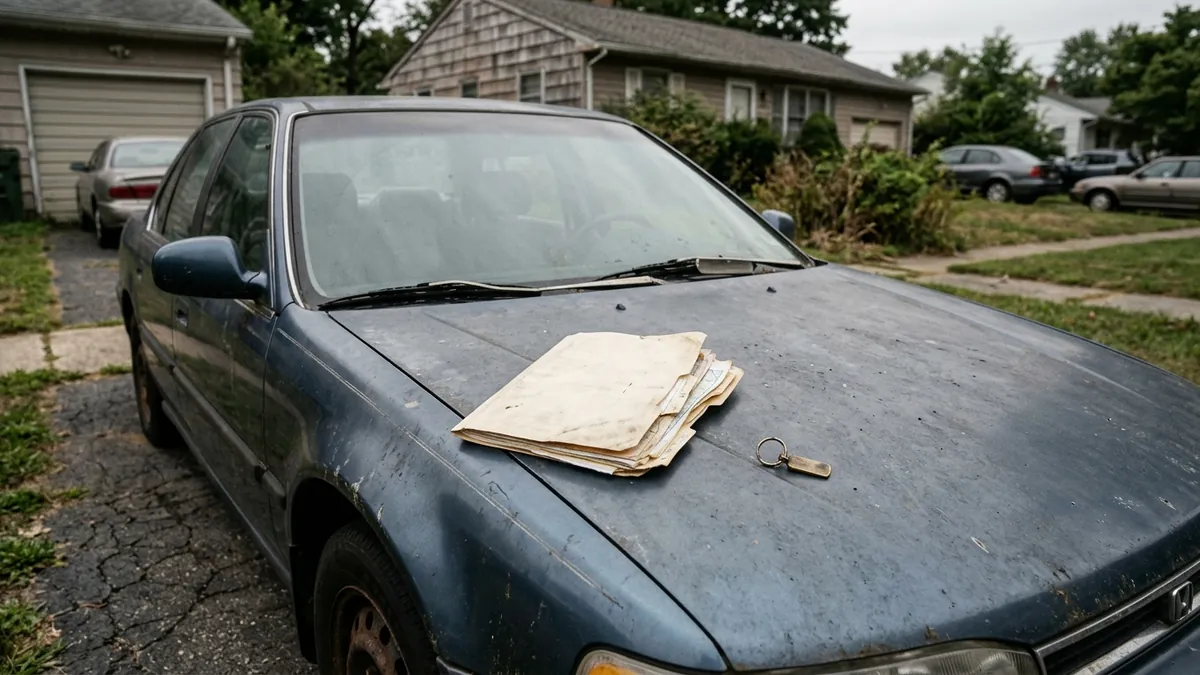
The certificate of title transfers ownership, so it is the first thing a buyer asks for. In Texas, for example, TxDMV tells sellers to hand over a properly signed title that includes the date of sale and the odometer reading. California's DMV requires the seller, or the lienholder if there is one, to sign the title.
- The signed title. Sign exactly where your state's title says the seller signs, and leave the buyer's line alone. Fill in the sale date.
- Photo ID that matches the title. If the name on your license and the name on the title differ, many yards will slow the sale down or stop it.
- A lien release, if a lender was ever listed. No buyer will take a car with an open lien on the title.
- A bill of sale with the VIN, date, price, and an as-is statement. Add "sold without keys" so nobody can dispute it later.
Write down the VIN from the dashboard plate or door-jamb sticker before you call. Without a key, you may not be able to get into the car later to read it. And if the title is what you are actually missing, read our guide on selling a junk car without a title before you contact any buyer. That is a much bigger problem than the key.
How a tow truck moves a car without keys
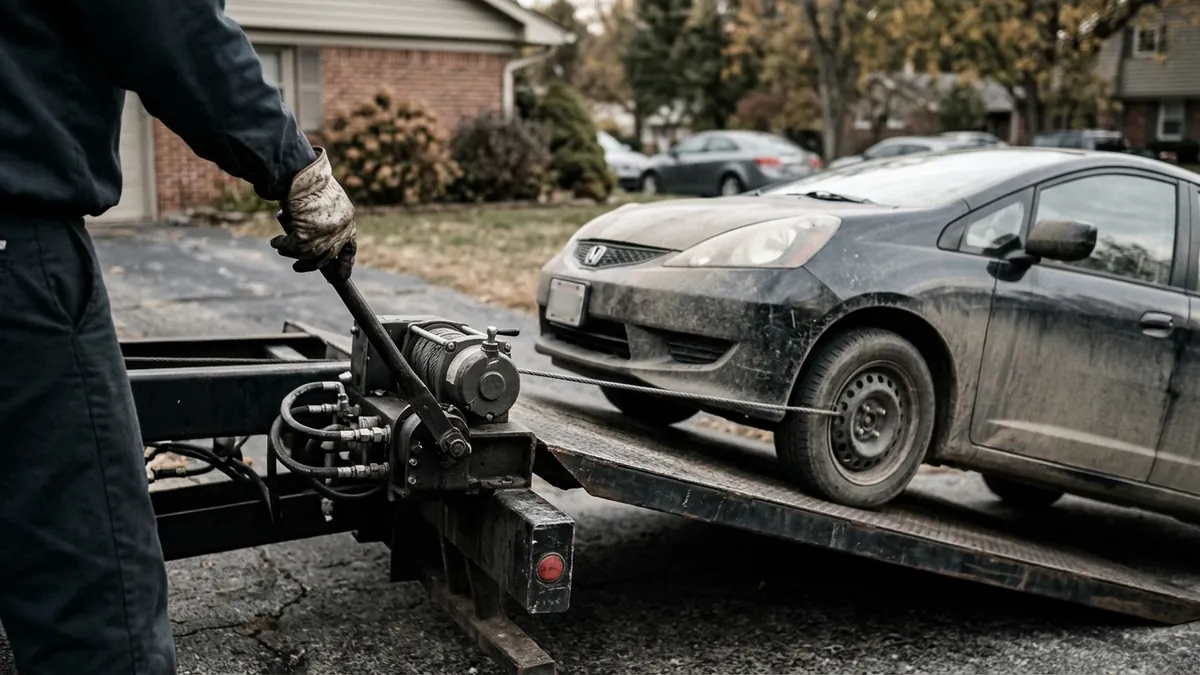
A tow operator can move almost any car without a key, provided they know ahead of time. Two things make a keyless car awkward: a steering wheel locked in place and a transmission that will not leave Park. With either one, the wheels will not roll or steer normally, so the driver brings equipment that lifts the car off the ground rather than dragging it.
| Situation | What the driver has to deal with | What to tell the buyer |
|---|---|---|
| Doors open, steering free | A standard wheel-lift tow often works | No key, but the car can be steered and rolled |
| Steering column locked | The front wheels cannot be aimed, so a flatbed or dollies are needed | Steering is locked and there is no key to release it |
| Automatic stuck in Park | The drive wheels will not roll, so the car has to be lifted or placed on dollies | Transmission is in Park with no way to shift it |
| Doors locked | The driver may need to open the car to release the parking brake or reach the VIN | Car is locked, and whether you authorize the driver to open it |
| Tight spot (garage, backyard, flat tires) | Extra winching or skates may be needed before loading | Exact location, tire condition, and clearance |
Send the buyer a couple of photos showing where the car sits and its tires. A driver who shows up with the wrong truck either leaves or tries to renegotiate on the spot, and both cost you a day.
Does selling without keys lower the offer?
Sometimes, and usually by less than sellers expect. A junk car is priced mainly on its weight, the parts still on it, and whether the title is clean. The key barely figures in. A buyer may still trim a quote when a keyless car takes more time or equipment to load. They may also cut it if they cannot start the engine to confirm it runs, which matters when a running engine was part of the offer.
Protect yourself by disclosing everything when you ask for the quote and getting the final number in writing. A legitimate buyer prices the hard tow up front. If someone quotes high on the phone and then cuts the price once the driver "discovers" there is no key, that is a common pickup-day tactic. For the factors that set the baseline, see our breakdown of what your junk car is worth in 2026.
Should you replace the key before you sell?
For a car going to a junkyard, a replacement key is usually not worth the money or the wait. Most cars built in the last few decades use a key or fob with an immobilizer chip, which has to be cut and programmed to that vehicle by a dealer or a locksmith with access to the automaker's security data.
Access to that data is controlled. The National Automotive Service Task Force (NASTF), a nonprofit that credentials locksmiths and technicians, says its Vehicle Security Professional credentials give access to automaker security information, and its customer authorization process confirms that the technician has established ownership of the vehicle. In practice, that means you will need your title or registration and photo ID before anyone cuts and programs a key.
A replacement key can make sense in a few cases:
- You are selling to a private buyer or a rebuilder who wants to start and drive the car before paying.
- The car runs, the offer depends on it, and the buyer will pay more after a test start.
- The key is cheap for your model, such as an older car that uses a basic cut key with no chip.
Otherwise, get a quote for the key and hold it up against the difference in offers. If the key costs more than it adds, skip it. Most junk buyers will not pay extra for a key on a car they plan to dismantle.
What to do if the car is locked or you also lost the title
A locked car is a tow problem, not a legal one, as long as you own it and say so in writing. Tell the buyer the doors are locked and confirm whether you authorize the driver to open the car. Remove anything you want to keep before pickup if you can reach it. If you cannot, list it on the bill of sale or accept that it goes with the car.
Missing keys and a missing title together are a harder problem. With no key, the title is your only proof of ownership. Lose both and a licensed buyer has almost nothing to go on. Contact your state motor vehicle agency for a duplicate title before you contact buyers, or ask the agency which substitute documents it accepts for junk vehicles, if any.
How to find a yard near you that buys cars without keys
When you search "junkyards that buy cars near me," run it from where the car sits, not where you live. A shorter tow is easier to arrange for a car that cannot be driven or steered. Browse licensed yards and recyclers in our directory of junkyards and auto salvage yards, or go straight to a state page such as junkyards in Texas or junkyards in California. When you call, say three things in the first minute: you have the title, there are no keys, and where the car sits.
If you would rather not make the calls yourself, you can request offers for your junk car and include "no keys" in the vehicle details so every quote already accounts for it.
After pickup: file your transfer notice
Your liability for the car ends when you notify the state, not when the truck leaves. California's DMV requires sellers to submit a Notice of Transfer and Release of Liability within 5 days of the sale. In Texas, TxDMV says filing a Vehicle Transfer Notification within 30 days of the sale protects you from tickets and tolls tied to the car after it leaves your hands. Texas also gives sellers the option to remove their plates and registration sticker.
Keep copies of the signed title, the bill of sale, and your transfer confirmation. Cancel the car's insurance only after it is gone. This is general information, not legal advice. Rules change; confirm with your state motor vehicle agency before you sell.
Sources
- Texas Department of Motor Vehicles: Buying or Selling a Vehicle (accessed October 2026)
- California DMV: Title Transfers and Changes (accessed October 2026)
- U.S. Department of Justice, NMVTIS: NMVTIS Reporting Entities (accessed October 2026)
- NASTF: What is NASTF? (credentials for mechanics, technicians, locksmiths) (accessed October 2026)