Selling a Car With a Blown Engine: Junk It, Part It Out, or Repair?
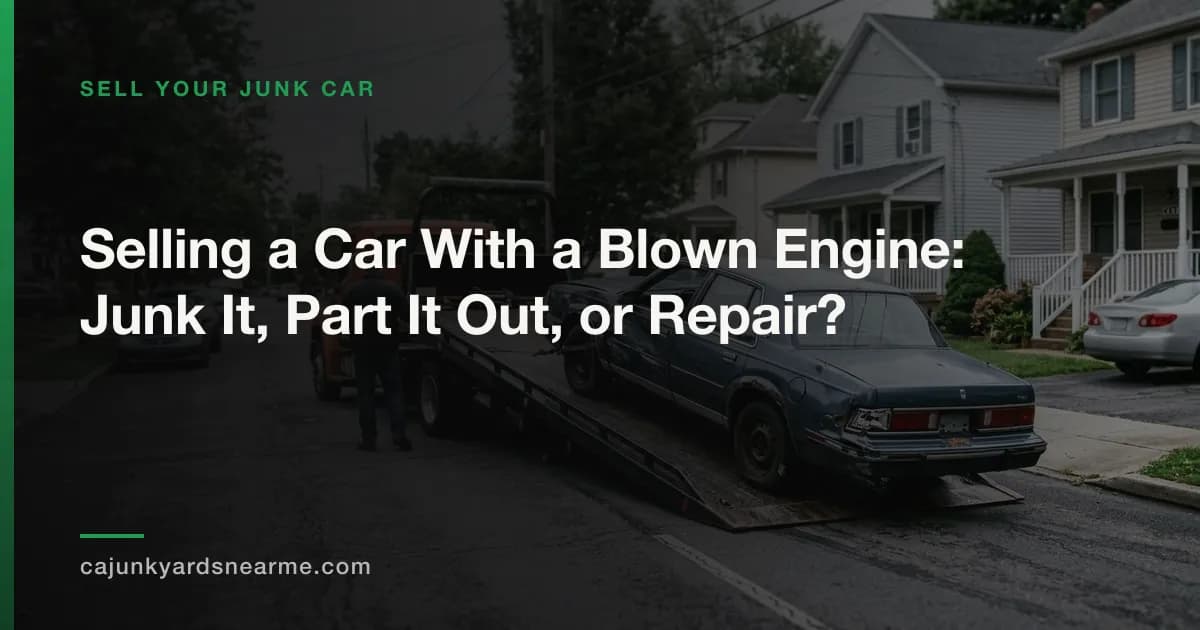
A blown engine turns your car into a math problem with three answers. Compare a repair, an as-is sale, and parting it out, using numbers you collect yourself.
Key Takeaways
- Compare three numbers: running value minus repair cost, the as-is offer, and the net from parting out.
- Get a written repair estimate that names the parts and labor, as the FTC recommends, before you decide anything.
- Junkyards buy non-running cars every day. A blown engine lowers the offer but does not zero it out.
- Parting out has legal limits. Nevada restricts used catalytic converter sales to buyers who can document ownership, and Texas requires a license past five salvage vehicles a year.
- California's paid retirement program requires the engine to start, so a blown-engine car does not qualify.
With a blown engine, you can repair the car, sell it as-is, or part it out. Repair only makes sense when the car's running value minus the full repair bill clearly beats an as-is offer. Selling as-is to a junkyard or salvage buyer is the fastest option and the least risky. Parting out can net more, but you pay for it in tools, space, and time, and you have to stay inside your state's rules.
First, confirm the engine is actually blown
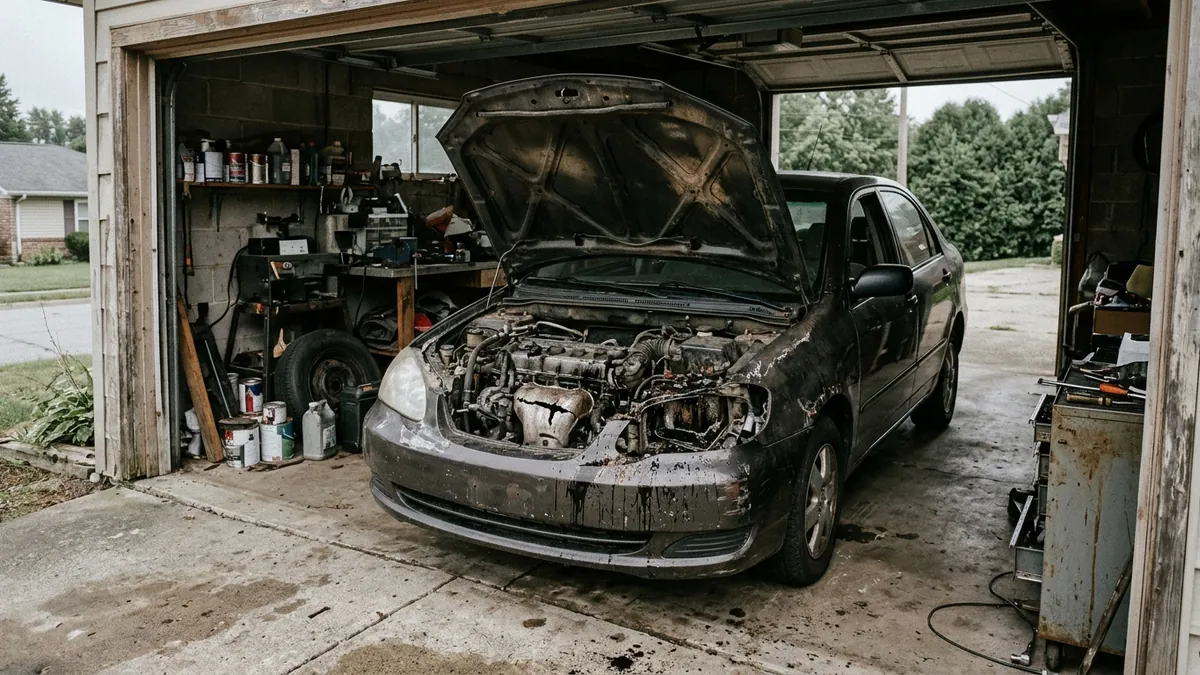
Get a real diagnosis before you price anything. "Blown" can mean a spun bearing, a broken connecting rod, a cracked block, or severe overheating damage. People also use it for problems that call for a different repair entirely, such as a failed head gasket, which a shop will price differently from a replacement engine.
The FTC's auto repair guidance recommends asking for a written estimate that identifies the condition to be repaired, the parts needed, and the anticipated labor charge. For costly repairs, it suggests getting a second opinion. It also notes that many shops charge for diagnostic time, so ask about the diagnostic fee before you approve the teardown, in case you decide to sell instead.
The three options side by side
| Option | What it takes | Main risk | Best when |
|---|---|---|---|
| Repair (used, rebuilt, or remanufactured engine) | A written estimate, a trusted shop, and cash or financing | Other systems fail after you have paid for the engine | The rest of the car is solid and you plan to keep it for years |
| Sell as-is to a junkyard or salvage buyer | Title, ID, and a couple of quotes | Accepting a lowball or a quote that drops at pickup | The car is older, has other problems, or you need it gone |
| Sell as-is to a private buyer or auction | Listings, photos, and time to field calls | No-shows and buyers who renegotiate on site | The model is popular with hobbyists or engine swappers |
| Part it out | Tools, space, weeks of selling, and a plan for the shell | Unsold parts and a stripped shell that is worth less as scrap | You have the skills, space, and a model with high parts demand |
How to run the repair math
A repair pays off only if the finished car is worth more than what you put in plus the offer you turned down. As one line:
Repair gain = running value of the car - full repair cost - as-is offer
If that number is small or negative, sell. If it is clearly positive, and the rest of the car is in good shape, a repair can make sense. Fill in your own numbers:
| Line | Where to get the number |
|---|---|
| Running value | A pricing guide or local listings for the same year, model, and mileage in running condition |
| Engine cost | Quotes for a used, rebuilt, or remanufactured engine that fits your VIN |
| Labor | The shop's written estimate, including how it prices labor |
| Related parts | Gaskets, fluids, filters, and anything the shop says must be replaced with the engine |
| Other known repairs | Tires, brakes, transmission, or anything else the car needed before the engine went |
| As-is offer | The best written quote from a junkyard or salvage buyer |
For engine pricing by type and mileage, see our guide to used engine prices. If you go the used-engine route, our checklist for checking a used engine before you buy helps you avoid paying twice. The FTC notes that salvage parts are used parts taken from another vehicle without alteration and that their reliability is seldom guaranteed, so ask what warranty comes with any engine you are quoted.
Selling as-is to a junkyard
A junkyard or auto recycler is the fastest way out, and a blown engine will not stop the sale. A yard prices a non-running car on its weight, the parts still on it, and the paperwork. The engine may be worthless, but the transmission, body panels, wheels, interior, and factory catalytic converter are not.
Expect less than you would get for the same car running, since the engine is one of the parts a yard would otherwise sell. For sourced 2026 payout ranges and how running versus non-running affects them, read what your junk car is worth in 2026. Tell every buyer the engine is blown when you ask for a quote, and get the number in writing so it does not change when the tow truck arrives.
In California, you can usually rule out one option. The Bureau of Automotive Repair's vehicle retirement program requires that the engine start through ordinary means and that the car move forward at least 10 yards under its own power, and it must pass an inspection at a BAR-contracted dismantler. Our BAR retirement program guide covers the full rules.
Selling as-is to a private buyer or auction
Some cars with blown engines are worth more to a private buyer than to a yard, mostly models that are popular for engine swaps or that have a solid body and transmission. A private sale takes longer and draws more no-shows, but the right buyer pays for the parts of the car that still work.
Be specific in the listing: what failed, how you know, and whether the car rolls and steers. Include the shop's written diagnosis if you have one. Swap buyers will ask about the mileage on the rest of the drivetrain, the transmission's condition, and whether the wiring harness and engine computer are intact, so answer those in the listing. Clear photos of the engine bay, the odometer, and all four sides of the car cut down on calls from people who were never going to buy. Write "sold as-is, engine blown" on the bill of sale. Online salvage auctions are another route for some sellers; see our guide to Copart and IAA auctions for individuals for how those work.
Parting it out pays more and takes more work
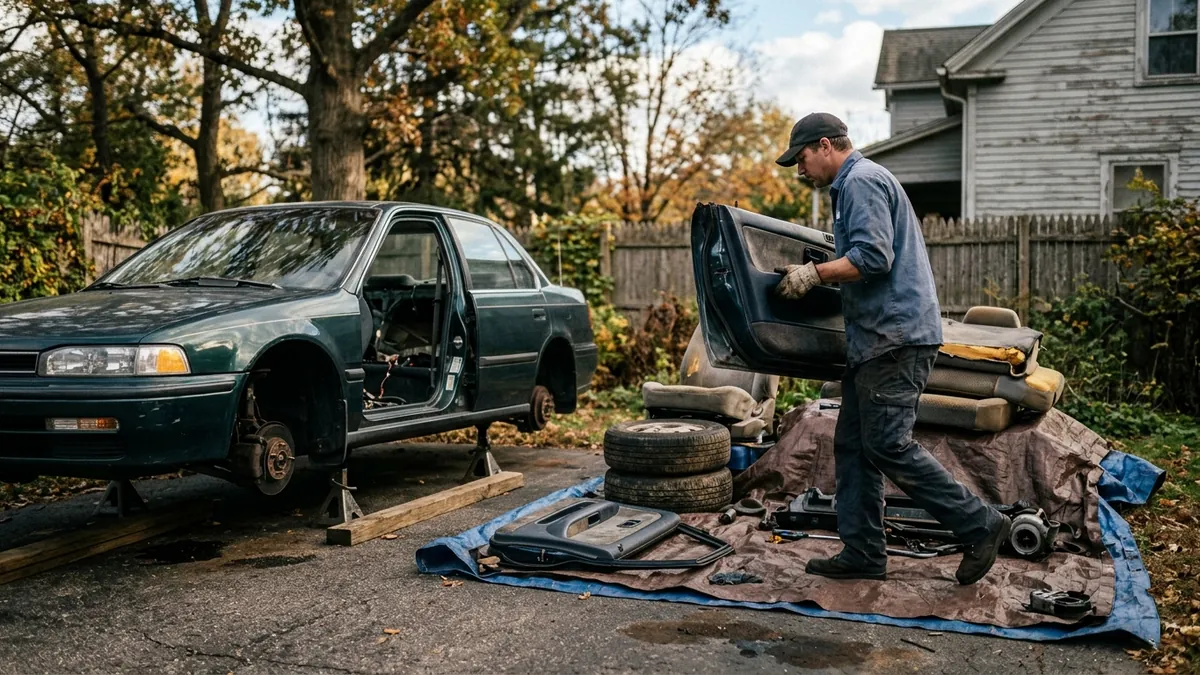
Parting out means pulling and selling the valuable components yourself, then selling what is left to a scrap yard. It can bring in more than an as-is sale, but only if the parts actually sell and you have room to store a disassembled car for weeks.
The practical costs
Pulling a transmission, seats, and electronics takes a lift or jack stands, the right sockets, and a safe place to work.
The fluids have to go somewhere. Drained oil and coolant need proper disposal. EPA advises collecting used oil in a leak-proof container and checking with local auto maintenance facilities or waste officials about drop-off. Drained oil filters can usually go to the same collection centers.
Then there is the shell. A stripped car is worth less as scrap than a complete one, and you still need the title to sell it to a yard.
The legal limits
Catalytic converters are the first thing to check. Many states now restrict who can buy or sell a used converter. Nevada's SB 243 (2023) bars buying a used converter from anyone other than certain licensed businesses or a person with documentation proving lawful ownership. Keep your title or registration with the converter, and read our catalytic converter value guide before you sell one.
Volume matters too. Selling parts off your own car is different from dealing in salvage vehicles as a business. Texas, for example, requires a salvage dealer license to buy or sell more than five salvage or nonrepairable motor vehicles in a calendar year. Other states set their own thresholds.
Which option fits your car?
- Repair if the car is newer, has no other major problems, and the worksheet shows a clear gain.
- Sell to a junkyard if the car is older, needs other work, or you want it gone this week.
- Sell privately if the model has an enthusiast or swap market and you can wait.
- Part it out if you have the skills, space, and time, and you have checked your state's rules on converters and salvage dealing.
How to get as-is offers near you
Get two or three written quotes before you decide, even if you are leaning toward repair. The as-is offer is part of the math. Start with the "junkyards that buy cars near me" results closest to the car, since it will have to be towed. Browse licensed yards and recyclers in our salvage yard directory, or request offers for your car and note the blown engine in the details so every quote reflects it.
This is general information, not legal advice. Rules change; confirm with your state motor vehicle agency before you sell or part out a vehicle.
Sources
- Federal Trade Commission: Auto Repair Basics (accessed October 2026)
- California Bureau of Automotive Repair: Retire your vehicle (accessed October 2026)
- Texas Department of Motor Vehicles: Salvage Dealer License (accessed October 2026)
- Nevada Legislature: Senate Bill 243 (82nd Session, 2023), enrolled (accessed October 2026)
- U.S. EPA: Managing, Reusing, and Recycling Used Oil (accessed October 2026)