How to Sell a Junk Car Without a Title (Legally)
Losing the title does not make your car worthless, but it does narrow your list of legal buyers fast. Here is what actually works and what will get you burned.
Key Takeaways
- A duplicate title is the cheapest fix in most states — typically $20-$30 and 2-6 weeks, and it removes the problem entirely.
- Selling with no title costs you roughly 30-60% of the offer. On a car worth the 2026 national average of about $535, that is a couple hundred dollars gone.
- Any buyer who says "no paperwork needed, we take anything" is a red flag. A licensed dismantler's license is worth far more than your car.
- File the notice of transfer after the sale. In California that is the REG 138, due within 5 days, and it is what ends your liability.
Can you sell a junk car without a title?
Sometimes yes, but the rules are set state by state and there is no national answer. Some states allow a licensed dismantler to accept an end-of-life vehicle on a junking certificate or on a bill of sale backed by current registration and matching photo ID. Other states require a title with no exception, and a yard that takes your car anyway is breaking the terms of its license.
Confirm your own state's rule with your DMV or equivalent agency before you call a single yard. Everything below describes how the process generally works and what to ask for. It is not a substitute for what your DMV tells you.
Why licensed yards care so much about the title
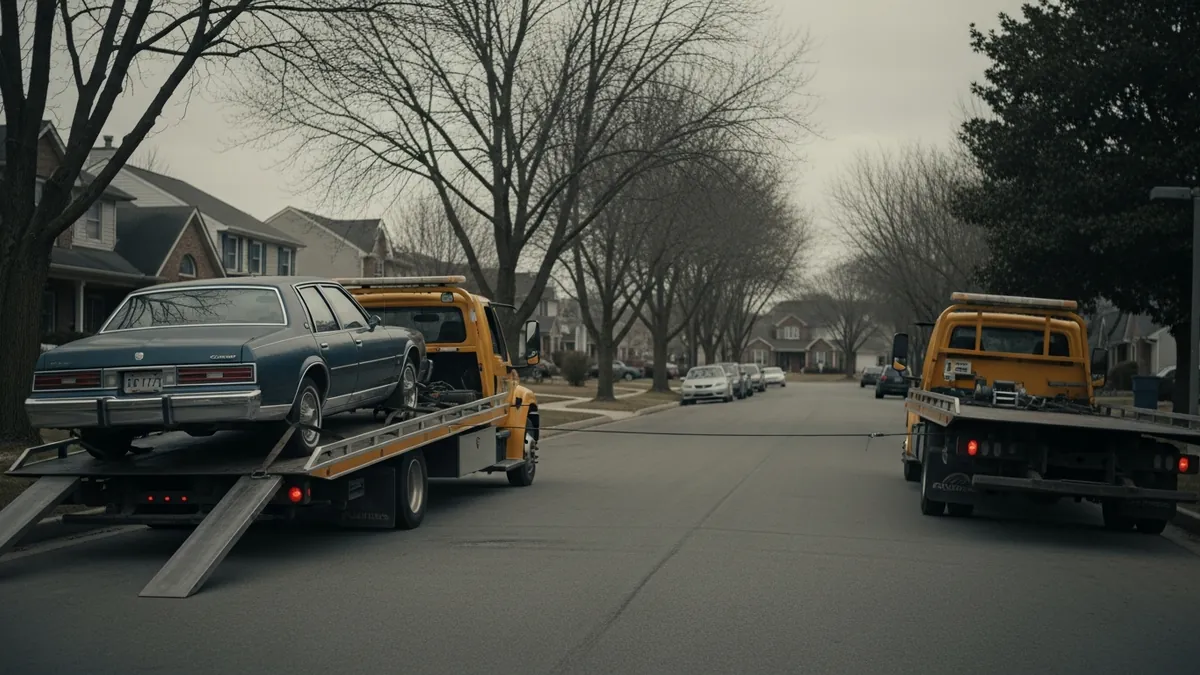
A licensed dismantler's operating license is worth vastly more than any single junk car. Every licensed yard runs on state-issued permits that can be suspended over improper intake records. A yard that accepts a stolen vehicle, even unknowingly, faces an investigation, fines, and a paper trail that leads back to the day it opened its gates.
That is why a real yard will ask you questions that feel intrusive. Does the name on your ID match the registration? Is there a lien listed? Is the VIN plate present and untampered? None of that is the yard being difficult. It is the yard protecting an asset that took years to build. If you want to see what a legitimate intake process looks like before you commit, browse licensed yards in our salvage yard directory and call two or three.
The four legal paperwork routes
You have four realistic paths, and the right one depends on why you do not have the title. Lost it in a move? Duplicate title. Bought the car years ago and the seller never signed anything over? Bonded title. Car is going straight to the crusher and will never be driven again? Junking certificate.
| Route | Typical timeline | Typical cost | What it lets you do |
|---|---|---|---|
| Duplicate title | 2-6 weeks by mail, same day at some counters | $20-$30 in most states | Everything a normal title does. Sell to any buyer at full price. |
| Bonded title | 4-12 weeks including the bond and inspection | $100-$300 for the surety bond plus DMV fees | Establishes ownership when no title was ever in your name. Not offered in every state. |
| Junking certificate | Days, often handled by the yard | Free to low, varies by state | Transfers the car for dismantling only. The vehicle can never be registered again. |
| Salvage certificate | Days to weeks, usually issued after an insurance total | Varies, often bundled into the claim | Sell a totaled car to a yard or rebuilder. Road use requires a rebuilt inspection. |
Costs and timelines vary widely between states, so treat the ranges above as a planning guide and confirm the real numbers with your own DMV.
What documentation substitutes in practice
When a state permits a no-title sale, the substitute is almost always a photo ID whose name matches the current vehicle registration. That pairing is what lets a yard document that it bought the car from the person the state believes owns it.
- Current or recently expired registration. This is the anchor document. Bring the physical copy, not a photo of it.
- Government photo ID that matches exactly. A maiden name on the registration and a married name on the license will stop the transaction cold at most yards.
- Bill of sale signed by both parties. It should list the VIN, the odometer reading, the date, the price, and an as-is statement.
- Lien release, if a lender was ever on the title. Yards check this. An open lien means the lender still has a claim on the vehicle.
Pull your VIN before you make any calls so every document you hand over reads identically. Our free VIN lookup gives you the year, make, model, and trim in the exact format a yard's intake system expects.
The price penalty for selling without a title
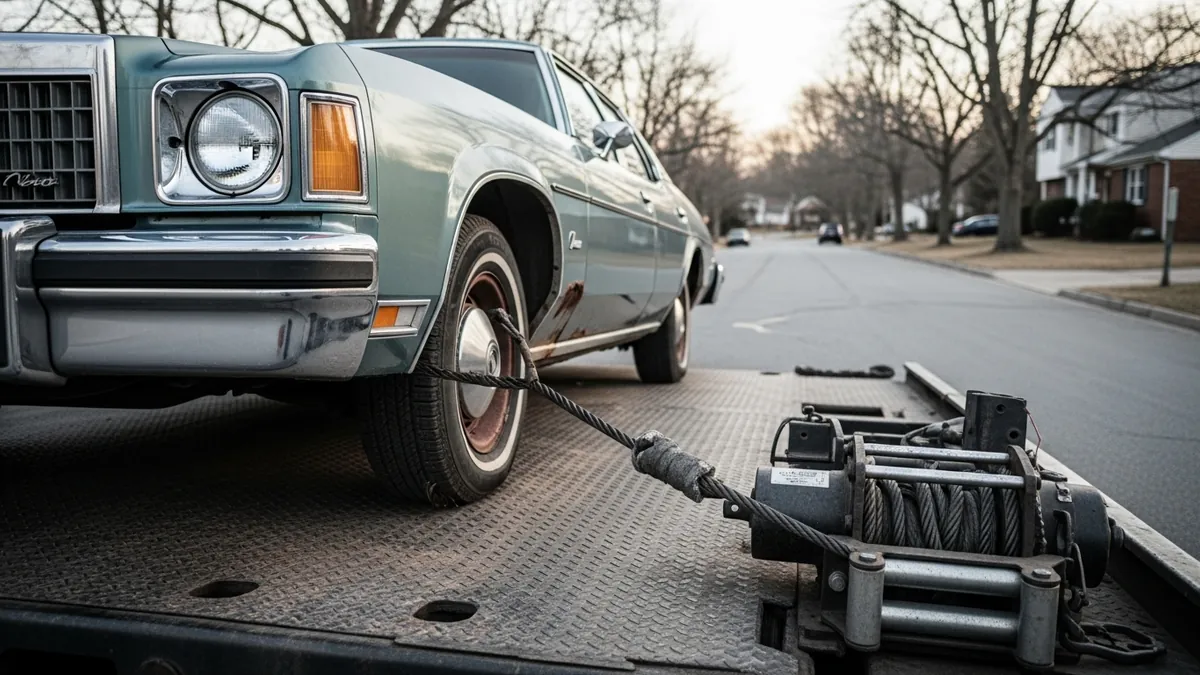
Plan on losing roughly 30-60% of the offer compared to the same car with a clean title in hand. Most junk cars sold for $250-$800 in 2026 with a national average around $535, so a title problem can turn a $500 car into a $200 one.
The discount is not the yard gouging you. It is the yard pricing in paperwork it now has to file, a longer hold before the car can be processed, and the small chance the vehicle turns out to be encumbered. Get the duplicate title first if you can wait three weeks. A $25 DMV fee that recovers $200 is the best return available to you in this entire process. If you want a realistic baseline before you negotiate, our guide to what your junk car is worth in 2026 breaks down how scrap weight and parts value set the floor.
Red flags: buyers who never mention paperwork
A buyer who asks for no documents at all is the single loudest warning sign in this transaction. Every licensed yard has an intake checklist because the state requires one. Silence on paperwork means the buyer either has no license or does not intend to dismantle the car.
- "We take any car, no questions" ads — the phrasing is the tell. Licensed operations advertise free towing, not free of paperwork.
- Cash only, no bill of sale — with no signed document, nothing on record shows the car left your possession.
- No physical address — a yard you cannot look up, drive to, or find in a state dismantler registry is not a yard.
- Refusal to give a license number — ask for it directly. A legitimate operator recites it without hesitating.
- They want to drive it away rather than tow it — a buyer planning to resell a car you think is scrap leaves your name attached to whatever happens next.
Walk away from any of these. The $50 extra someone offers is not worth the parking tickets, toll violations, or abandoned-vehicle fees that follow a car still registered in your name. Our complete guide to finding junkyards near you covers how to verify an operator before you hand over keys, and you can get a quote from vetted buyers without exposing your phone number to a dozen call centers.
File the notice of transfer, then you are done
The notice of transfer is what actually ends your liability, and skipping it is the most expensive mistake sellers make. Handing over the keys does not remove your name from the state's records. Filing the notice does.
In California the form is the REG 138 notice of transfer and release of liability, due within 5 days of the sale, and you can file it online in about five minutes. Other states use different form numbers and different deadlines, some as short as five days and some as long as thirty. Look up yours the same day you sell, not the following weekend.
Two more steps close the loop. Cancel the insurance policy only after the car has physically left your property, and remove the license plates before the tow truck pulls away unless your state directs you to leave them on. Keep your copy of the bill of sale and the transfer confirmation for at least three years.